

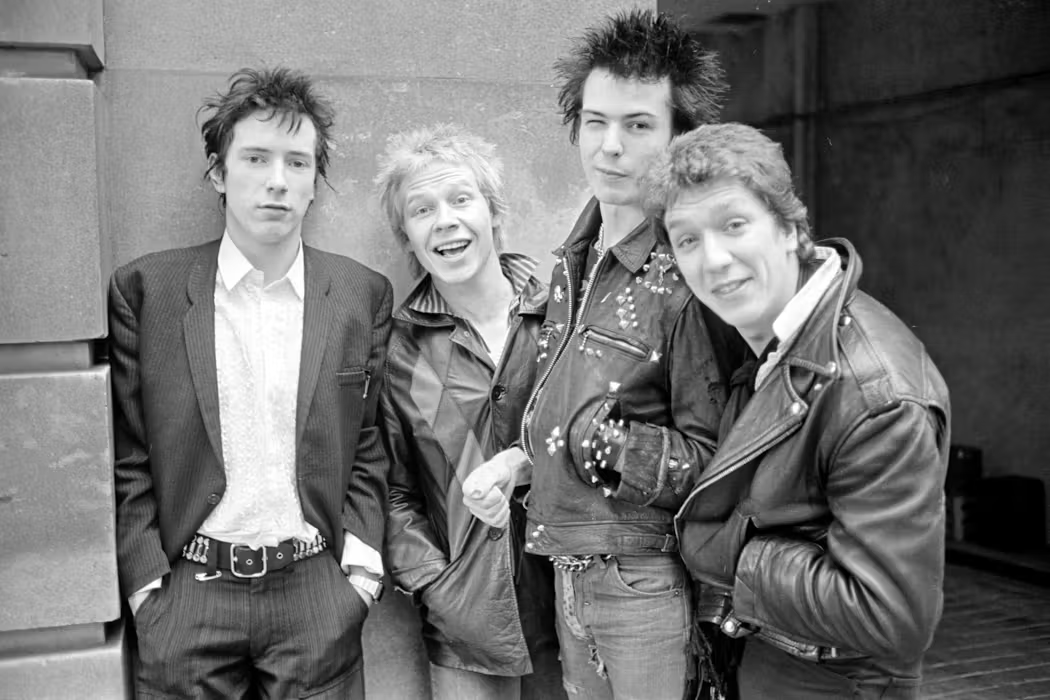
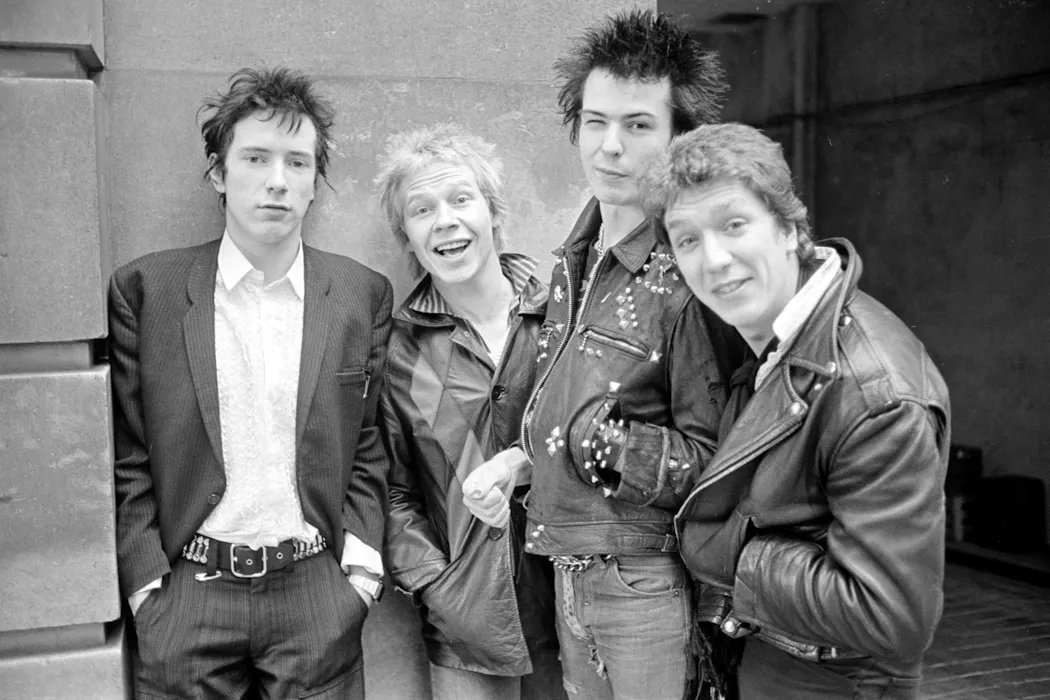
On November 26 1976, a London-based punk band released a record that created shock waves around the world.
While not the first punk single to be released (The Damned’s New Rose, Radio Birdman’s Burn my Eye EP, and I’m Stranded by the Saints were released a few weeks earlier), Anarchy in the UK, by the Sex Pistols set the tone and a high bar for what was to follow.
With its snarling lyrics (“I am an antichrist”) and raw sound, the song blew a gaping hole in 1970s complacency.
The Sex Pistols are often thought to be obnoxious anarchists who promoted chaos. But in many ways they were the opposite.
Here are five ways they created a template for a more inclusive, more tolerant, and better balanced society that remains relevant in today’s uncertain world.
1. Social and political convention
Like many parts of the developed world, Britain in the mid-1970s faced economic decline, industrial unrest and growing disillusionment with established institutions.
Anarchy in the UK, followed by the band’s next single, God Save the Queen, released during Queen Elizabeth II’s Silver Jubilee in 1977, voiced the anger and alienation of many people while raising questions about national authority and identity.
The Pistols opened a door for many young people, inviting them to challenge established regimes, and to say no.
Their assertion that there was “no future” is also relevant today.
2. Style and fashion
Alongside their strong influence on music, the Pistols heavily influenced style and fashion.
It is sometimes claimed the Pistols were conceived as a vehicle for Vivienne Westwood’s iconic clothing, which included bondage wear. As well as wearing her clothes, the band also took their name from her shop SEX on Chelsea’s Kings Road in London.
Westwood’s punk stylings encouraged others to create distinctive clothes and outfits from everyday and discarded items, including bin-bags and safety pins.

Based on her work with the Sex Pistols, and their manager Malcolm McLaren, Westwood’s career as a fashion iconoclast continued until her death in 2022.
Elsewhere, graphic designer Jamie Reid’s combination of “ransom note” typography and situationist style détournement has had a lasting effect on graphic art and design, while the filmic work of Julien Temple (who made the Sex Pistols 1980 film The Great Rock ‘n’ Roll Swindle) has heavily influenced the development of the rock biopic.
3. DIY
One of the Pistols main influences was in the emergence of a DIY approach to music.
This is perhaps epitomised in the Pistols infamous gig at the Lesser Free Trade Hall in Manchester on June 4 1976, which inspired attendees to form their own bands (famously: Joy Division, Buzzcocks and The Smiths).

In this, the myth that the Pistols “couldn’t play” simply inspired the realisation that anyone could pick up a guitar and make a record.
This DIY approach also involved the dissemination and promotion of music and the artists, through home-made fanzines, the precursor to the blogs and zines that proliferate today.
4. Gender and inclusivity
The Pistols encouraged women to become musicians.
Siouxsie Sioux was a member of the Pistols entourage, the Bromley Contingent, contributing to the chaos of the Sex Pistols’ infamous TV confrontation with Bill Grundy before founding the Banshees.
Palmolive and Viv Albertine of the Slits were previously members of the (unrecorded) Flowers of Romance along with John Ritchie (aka Sid Vicious). Chrissie Hynde, who had worked at SEX, went on to form The Pretenders. Poly Styrene was inspired to form X-Ray Spex having seen an early Pistols gig in Hastings in 1975.
The Pistols were central to a London punk scene that embraced and promoted diversity and difference at a time of racial tensions and intolerance.
5. Global influence
The Pistols soon found fans across the world, including in many countries in the Soviet orbit, where their anti-establishment pronouncements found a resonance among disaffected youth.
In Indonesia, the circulation of semi-legal cassette tapes, and the few music publications tolerated by President Suharto’s “New Order” ultimately inspired an anarcho punk scene typified by Bandung band Runtah.
Thriving punk scenes have developed across the globe from Brazil to Japan, from Australia to the Arctic.
At a downtown bar in Perth, Australia, decades after the Sex Pistols first performed, another punk band rattle through their electrifying and energetic set to an adoring and enthusiastic audience. Pogoing may have evolved into moshing, but otherwise much remains the same.
Amyl and the Sniffers are among the latest in a long line of bands from around the world to have embraced the spirit of punk and the Pistols, carrying the legacy to a new generation of audiences.
This article draws on The Routledge Handbook of the Sex Pistols, edited by the authors with Mike Dines and Gabriela Gelain.

The authors do not work for, consult, own shares in or receive funding from any company or organisation that would benefit from this article, and have disclosed no relevant affiliations beyond their academic appointment.



Comment
0Upholding journalistic discourse. No registration required.
No comments yet. Share your perspective!