

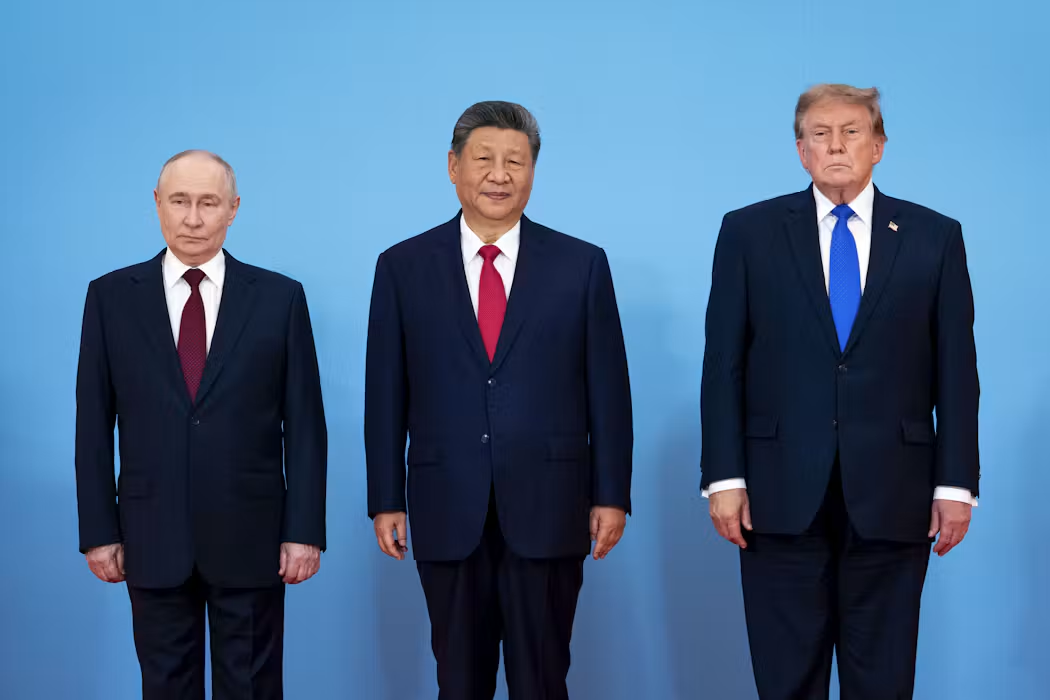
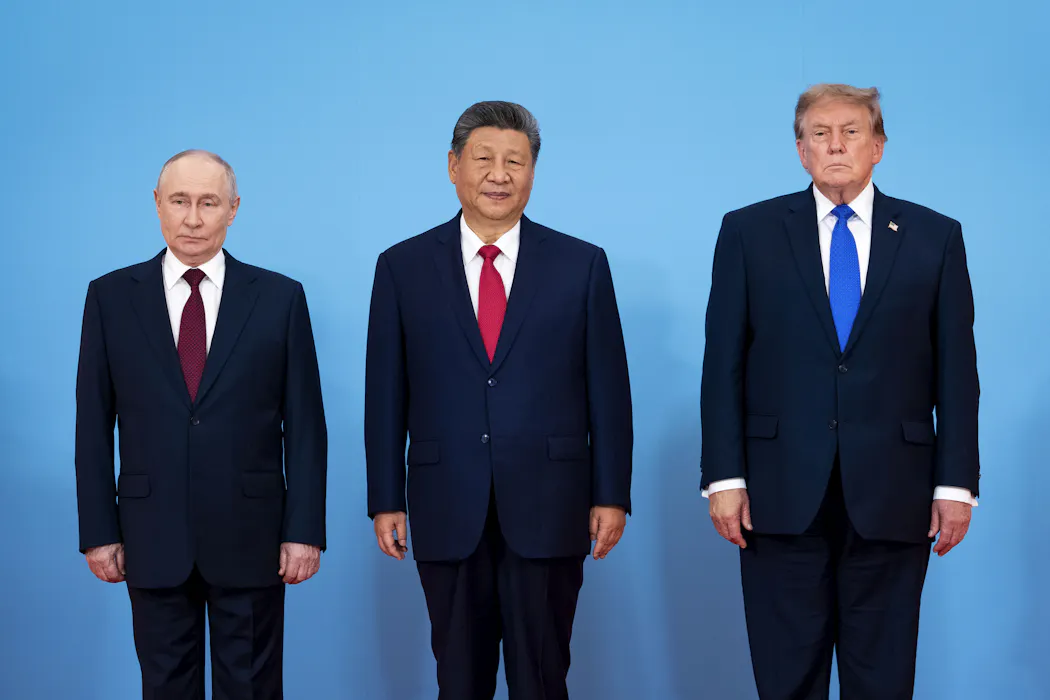
It was touted as a history-making summit of the year. Presidents Donald Trump, Vladimir Putin and Xi Jinping sat down on Nov. 19, 2026, in Shenzhen, China, on the sideline of the Asia-Pacific Economic Cooperation summit, for the first such trilateral meeting of the three leaders.
Going into the talks, the trio had much to dicuss: the ongoing war in Ukraine, Middle East conflict and the march of artificial intelligence technology chief among them.
But what did 90 minutes of conversation deliver?
As an expert on U.S.-China relations at Harvard Kennedy School, I saw a lot of style, but less substance.

What were the key takeaways from the meeting?
The first thing to pay attention to is the symbolism of the occasion. And so much of what was presented in Shenzhen was about the body language of the three men, their interactions and what that may indicate in regards to how they view themselves in a potentially new global order.
And this was on show even before the leaders sat down. At the beginning of the trip, when Trump landed in Shenzhen, he was met by Xi. Meeting a foreign leader at the airport is seen as a special honor bestowed by the Chinese president.
And then came a hug – that really was unprecedented. I haven’t seen the general secretary of the Chinese Communist Party hug anyone before – certainly not his Politburo comrades.

It was all choreographed, of course. But it continued into the summit itself. The picture of a big table with Trump, Putin and Xi there is also symbolic. And look who was in the middle: Xi. Here we have China presenting as the “Middle Kingdom,” steadying the world. Whether that is an accurate depiction of China’s global presence is beside the point – it is how Xi would like Beijing to be seen.
In terms of policy, however, not much was actually done, but we did get a glimpse of what was on the three leaders’ minds.
So we had talk of reforming the U.N. – something all three agree needs to be done. In particular, China wants more power in the organization, while Trump has become increasingly disillusioned with the international body.
And there was also a lot of discussion on nuclear weapons controls. In fact, all three signed off on a document that made statements and aspirations – with fewer commitments – to tamping down nuclear threats. Interestingly, this was all based around a phrase that U.S. President Ronald Reagan and Soviet leader Mikhail Gorbachev first aired in 1985: “Nuclear war cannot be won, must never be fought.”
All three leaders signed onto the phrase, although there was not an awful lot of substance on how nuclear controls would be implemented. The main treaties on the matter expired a while ago, and Beijing, which lags behind Washington and Moscow in regards to capacity, may have different thoughts on the matter.
What wasn’t discussed?
The big thing not discussed in any substantive way was the wars raging in the domains of two of the three nations.
For Trump, that means Iran. Washington has not been able to bring the conflict in Iran to a conclusion some nine months after it began. The thinking going into the summit may have been that if China – or even Russia – were able to help pressure Iran and bring an end to the conflict, that would be encouraged.
But the spectacle of the U.S. not being able to end the war in Iran is not, I suspect, something that the Russians and Chinese are in a rush to bring to an end. In any case, neither appeared willing to give up a key card – assistance to Washington in the matter – in this meeting.
At the other end of that Eurasian spectrum is Ukraine. It was not mentioned by name at the summit. Besides the fact that the three leaders are not on the same side of the conflict, there is also the fact that Ukraine’s European allies were not in the room – and it would have been far too much for Europe for Trump to make news on Ukraine in the company of Putin and Xi.
Beyond those conflicts, AI regulation and critical mineral supply chains were not discussed by the three leaders. But that isn’t to say that those issues – crucial ones in the U.S.-China economic rivalry – were not brought up in the bilateral conversations that took place in Shenzhen. It may be that they were heard in these more discreet, private settings.
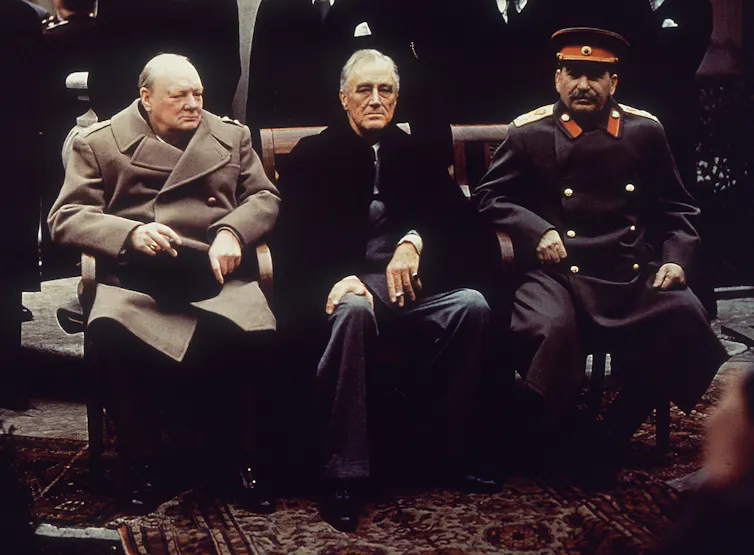
This was touted as Yalta II – was it?
There were some immediate similarities with the Yalta Conference – the February 1945 summit at which the U.K.’s Winston Churchill, Joseph Stalin of the Soviet Union and U.S. President Franklin D. Roosevelt planned out the end of World War II and began discussing postwar Europe. But these were largely about the imagery of the three men around the table.
Of course, the big three then included Britain; there was no China. That alone tells you how much geopolitics has changed over 80 years.
Also, Stalin, Roosevelt and Churchill were all on the same side in 1945. It was a case of comrades in arms that would soon be drifting apart as the Cold War developed.
Here it may well be the other way around. China and Russia are partners, but the U.S. is seen as their adversary.
What Trump may want is detente rather than a new Cold War. Does this mean an emerging policy of Russia, China and the U.S. coming together in a new order? I imagine the Europeans may have something to say about that.

Rana Mitter does not work for, consult, own shares in or receive funding from any company or organization that would benefit from this article, and has disclosed no relevant affiliations beyond their academic appointment.

Comment
0Upholding journalistic discourse. No registration required.
No comments yet. Share your perspective!