

Why Pak soaps click in India despite a ban
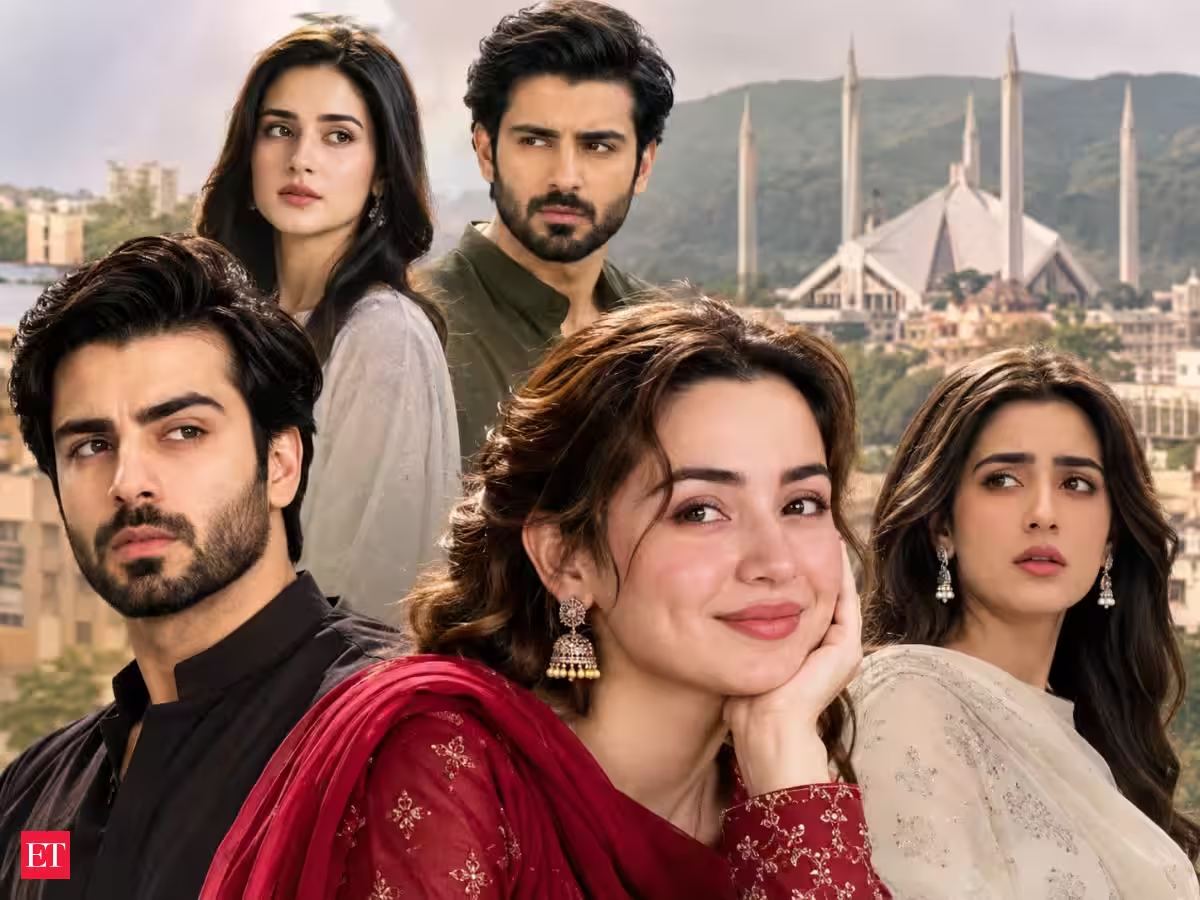
India's latest move to keep Pakistani-origin content off streaming platforms, amid the huge ongoing row over Netflix's upcoming series Jo Bachay Hain Sang Samait Lo, has brought into sharp focus the enduring popularity of Pakistani dramas among Indian viewers.The move is a continuation of the strict...
Published
Original News Source
Economic Times — Top Stories
Source Website
economictimes.indiatimes.com ↗
Content & Media Rights
Economic Times — Top Stories
Editorial Publisher
360 NEWS (Independent Media)
360 News
India's latest move to keep Pakistani-origin content off streaming platforms, amid the huge ongoing row over Netflix's upcoming series Jo Bachay Hain Sang Samait Lo, has brought into sharp focus the enduring popularity of Pakistani dramas among Indian viewers.The move is a continuation of the strictures that India had placed on its relations with its neighbour and arch-rival after the Pahalgam terror attack and Operation Sindoor (April-May 2025), and the brief but intense military face-off that followed.Also read | Centre asks Netflix to block Pakistani content from India streaming amid row over ‘Jo Bachay Hain Sang Samait Lo’The govt's November 26 directive to Netflix is in line with its original post-Pahalgam stance. After the war, the Information and Broadcasting Ministry had on May 8, 2025 directed streaming platforms and digital intermediaries to not air Pakistani films, series, songs, podcasts and other content in India.The directive came amid complaints over the possible December 4 India release of the series that stars Fawad Khan, Mahira Khan and Sanam Saeed.The issue is no longer just about the entertainment industry. On both sides of the border, there currently is a trend of seeing any kind of exchange against the backdrop of cross-border terrorism and national security.It may be noted that Pakistan steadfastly rejects India's accusations on terrorism despite an abundance of proof.The contrast in storytellingThe appeal of Pakistani content for Indians lies in an assortment of factors.Familiar language, everyday family drama, emotional storytelling and compact, easy-to-follow stories -- these characteristics have helped Pakistani productions find huge viewership in India despite the bitterness that pervades bilateral ties.The popularity of Pakistani serials in India -- despite there being no official distribution channels -- is rooted partly in what viewers see as a contrast in storytelling.Analysts say Pakistani content offers something that many Indian viewers feel is missing from mainstream Indian television: realism, restraint and emotional depth.Also read | India’s micro-drama market triples to $322 million, largest in Asia outside ChinaIndian television, particularly the mainstream family serials, has traditionally largely favoured elaborate sets, stylised costumes, lengthy & meandering plotlines and dramatic twists, says an AP report.Pakistani dramas, in contrast, largely use real homes, understated production, natural dialogue and tighter story arcs; they often revolve around marriage, family expectations, heartbreak, social pressures and women's choices, it adds.Instant pullThese subjects resonate across the border as they don't need viewers to understand a different cultural setting, the report notes.Urdu, the language of Pakistani content, is readily understood by much of the Hindi-speaking audience. Besides, shared customs, food, family settings, jokes and wedding traditions make the characters recognisable.According to a ToI report, Pakistani shows such as Humsafar, Zindagi Gulzar Hai, Kabhi Main Kabhi Tum and Mere Humsafar have developed audiences through relatable characters rather than spectacle.Also, the episode count for Pakistani serials is usually much smaller compared to Indian ones. That also has a role in boosting their appeal, as they let viewers follow a story arc without committing to months and months -- sometimes years -- of watching.Small screens, big viewsIndian entertainment industry is film-dominated. Films here are often built around theatrical releases, stars, music, big budgets and nationwide marketing. Pakistani entertainment, on the other hand, is strongly anchored in television drama.In Pakistan, serials have a place in popular culture, in the same manner that Bollywood has in India. Actors become household names, weekly episodes fuel conversations and hit shows can travel way beyond their domestic audience.India has massive scale and genre diversity, much more than its neighbour has. Pakistani dramas have still carved out a niche for themselves through more intimate storytelling, strong writing and "performances that feel less manufactured", an AP report says.Today's digital ecosystem has amplified this popularity even more. YouTube uploads, short clips, Instagram reels, fan edits, character discussions and viral dialogues frequently introduce viewers to shows they might otherwise never discover.Pakistani dramas have also garnered extraordinary global online viewership numbers. Tere Bin has crossed 4 billion YouTube views, while Khuda Aur Mohabbat Season 3 has recorded 3 billion, ET reported.One may note that these are worldwide figures, not India-specific viewership numbers. Broadcasters and streaming platforms have not publicly disclosed reliable India-only audience estimates.Content caught in crossfireTensions in India-Pakistan ties frequently seep into other areas. Culture & entertainment often gets caught in this crossfire.Following the 2016 Uri attack, film bodies and political groups demanded Pakistani artistes leave India. Artists who faced flak included actors Fawad Khan and Mahira Khan, and singers Atif Aslam and Rahat Fateh Ali Khan.After Pahalgam, Instagram accounts of several Pakistani celebs -- Fawad, Mahira, Hania Aamir and Ali Zafar -- became inaccessible in India.Restrictions have at times extended beyond films and streaming to concerts, social-media access and professional collaborations as well, PTI reported.India's latest reminder to Netflix was slammed in Pakistan as an attempt to politicise culture. The most vocal among critics was Minister Ahsan Iqbal, who said artistic exchanges should not be treated as political threats.Exclusion from Indian audiences will hurt Pakistani creators and streaming players, various reports said citing industry insiders.
GOOGLE ADVERTISEMENT
360°
360° PERSPECTIVE
Verified viewpoints, counter-arguments & evidence
Policy Proponents & Institutional Observers
(Institutional Assessment Desk, Public Policy Review Desk)
2026-11-26
"Proponents and sector analysts emphasize that this development strengthens institutional transparency, addresses long-standing public priorities, and establishes a foundation for durable systemic progress."
Source & Evidence:
Source: Economic Times — Top Stories ↗
Related Stories

Beauty & Pageants
Miss International Grand Finals – UK Places 1st Runner Up!
30 minutes ago

Entertainment & Cinema
Rashmika Mandanna recalls a terrifying stunt sequence while shooting Mysaa: “I thought, ‘Okay, this is the end’”
32 minutes ago

Entertainment & Cinema
Ramayana Box Office: Nitesh Tiwariâs Epic Crosses Pushpa 2 Sets A Close Eye On Dangal
34 minutes ago

World
Simon Jack: Is Poundland's US owner to blame for its collapse?
9 minutes ago
Editorial & Syndication Notice: This story has been syndicated or published by 360 NEWS in accordance with verified fair-use, official press dissemination, and original attribution protocols. All trademarks, photos, and referenced quotes remain the property of their respective owners. For editorial corrections, press inquiries, or rights notices, contact [email protected].

Comment
0Upholding journalistic discourse. No registration required.
No comments yet. Share your perspective!