

UP Elections 2027: Congress Demands 130 Seats, SP Offers 26; Can Akhilesh Yadav Bridge The Gap?
<p>The seat-sharing arrangement between the Samajwadi Party (SP) and the Congress has emerged as the biggest challenge for the opposition alliance ahead of the 2027 Uttar Pradesh Assembly elections. While the Congress is staking a claim to around 130 seats, Akhilesh Yadav's party has proposed...
Published
Original News Source
ABP Live — Elections
Source Website
news.abplive.com ↗
Content & Media Rights
Deepika Bhatt / ABP Live — Elections
Editorial Publisher
360 NEWS (Independent Media)
360 News
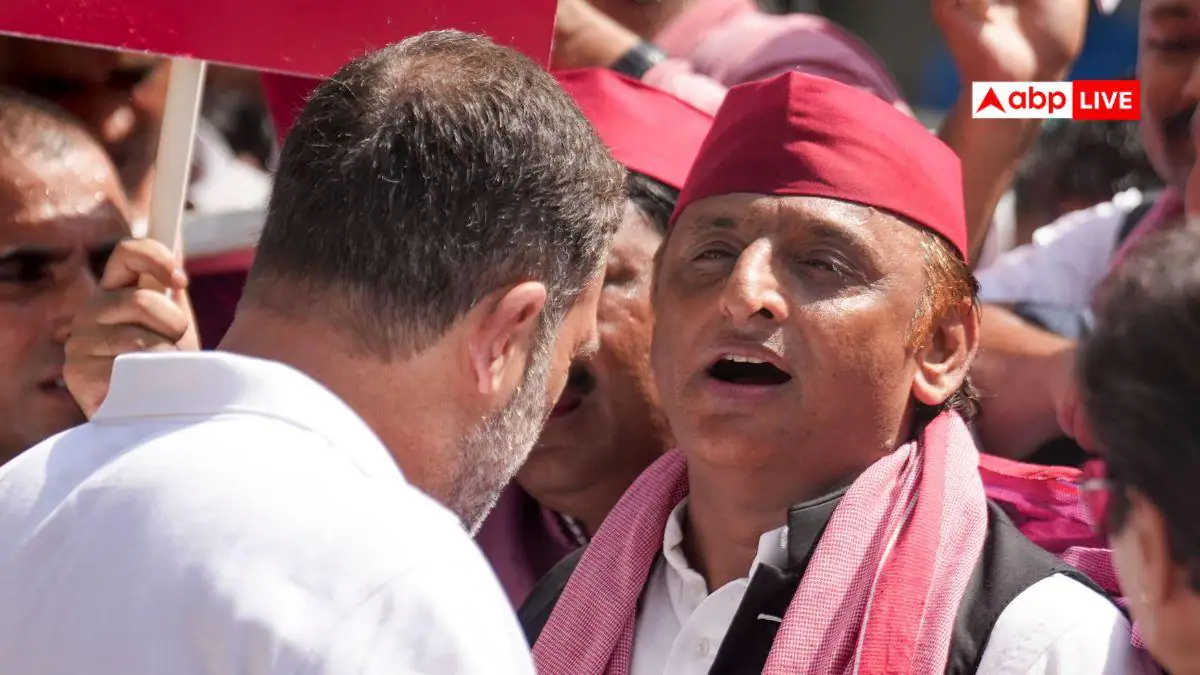
<p>The seat-sharing arrangement between the Samajwadi Party (SP) and the Congress has emerged as the biggest challenge for the opposition alliance ahead of the 2027 Uttar Pradesh Assembly elections. While the Congress is staking a claim to around 130 seats, Akhilesh Yadav's party has proposed just 26 seats in the initial round of discussions. Although both parties have expressed their willingness to contest the elections together, the big question is how they will bridge the considerable gap between the Congress's demand and the SP's offer.</p>
<p>Uttar Pradesh will go to polls in 2027 to elect representatives to its 403-member Legislative Assembly. After joining hands in the 2024 Lok Sabha elections to challenge the BJP, the SP and Congress are now faced with the challenge of working out their electoral arithmetic for the Assembly polls. While the alliance performed successfully in the Lok Sabha elections, seat-sharing for the Assembly polls has proved to be considerably more complicated. Even after the second round of discussions held on November 24, the two parties failed to reach a final agreement.</p>
<p>The Congress submitted a list of 130 seats, while the SP proposed 26 constituencies. The biggest stumbling block in the alliance remains the number of seats. The Congress had initially made an even bigger claim. In October, the party had indicated that it was preparing a list of 175 to 200 constituencies. During subsequent discussions, the demand was reduced to 130 seats. The SP, meanwhile, has made an initial offer of 26 seats and indicated that the number could increase.</p>
<p>However, it is reportedly reluctant to go beyond 50 seats. This leaves a gap of approximately 70 to 90 seats between the two parties. While the Congress views the issue as a question of securing a respectable share in the alliance, the SP maintains that seat allocation should be based on the winnability of candidates rather than the number of constituencies demanded.</p>
<h2>2024 Lok Sabha Performance Vs 2022 Assembly Record</h2>
<p>The Congress is justifying its demand for a larger share of seats by citing its performance in the 2024 Lok Sabha elections. The SP won 37 of Uttar Pradesh's 80 parliamentary constituencies, while the Congress secured victory in six. The Congress believes its performance in the Lok Sabha elections, along with the active involvement of Rahul Gandhi and Priyanka Gandhi Vadra, has strengthened its political position in the state.</p>
<p>It argues that this improved standing should translate into a larger share of seats in the Assembly elections as well. The SP, however, is relying on the results of the 2022 Uttar Pradesh Assembly elections. In that election, the Congress won just two of the state's 403 seats, while the SP secured 111. The SP argues that Lok Sabha election results cannot be directly translated into Assembly-level electoral strength. Local organisation, candidate profiles and booth-level networks play a much greater role in determining the outcome of Assembly elections.</p>
<p>This is the fundamental political disagreement between the two parties. The Congress is seeking a larger share based on its recent electoral revival, while the SP is relying on the previous Assembly results and its grassroots strength.</p>
<h2>Congress Seeks Amethi-Rae Bareli</h2>
<p>The Congress's demands are not limited to the overall number of seats. It also wants a significant share in constituencies that it considers its traditional political strongholds. Amethi and Rae Bareli are particularly important in this regard. The Congress is seeking a substantial share of Assembly seats in both districts. Its argument is that its historical connection with these constituencies, particularly because of the Gandhi family's association with the region, and its performance in the 2024 Lok Sabha elections strengthen its claim.</p>
<p>The SP, however, does not appear willing to concede these seats solely on the basis of the Congress's traditional political identity. The party has reportedly conducted its own surveys in these areas to assess the Congress's actual electoral strength. The SP believes that seats in an alliance should be allocated on the basis of current winnability rather than historical political claims. As a result, the Amethi-Rae Bareli issue could emerge as a major prestige battle between the two parties.</p>
<h2>Congress Seeks Representation From Western UP To Purvanchal</h2>
<p>In terms of regional representation, the Congress wants a presence across almost every district of Uttar Pradesh. Its demand is that, barring SP strongholds such as Etawah and Mainpuri, it should get at least one Assembly seat in nearly every district. This would not only give the Congress an opportunity to contest elections across the state but also help it expand its organisational presence. In response, the SP has submitted its preliminary list of 26 constituencies. The regional breakdown is as follows:</p>
<table style="width: 100%; border-collapse: collapse; border: 1px solid #000;" border="1" cellspacing="0" cellpadding="8">
<thead>
<tr>
<th style="border: 1px solid #000; padding: 8px; text-align: left;">Region</th>
<th style="border: 1px solid #000; padding: 8px; text-align: left;">Constituencies in SP's 26-seat list</th>
</tr>
</thead>
<tbody>
<tr>
<td style="border: 1px solid #000; padding: 8px;">Western UP and Braj</td>
<td style="border: 1px solid #000; padding: 8px;">Baghpat, Modinagar, Hapur, Jewar, Siyana, Khurja, Khair, Iglas, Mant, Agra North, Fatehpur Sikri</td>
</tr>
<tr>
<td style="border: 1px solid #000; padding: 8px;">Awadh and Central UP</td>
<td style="border: 1px solid #000; padding: 8px;">Bilgram-Mallanwan, Govind Nagar, Nanpara</td>
</tr>
<tr>
<td style="border: 1px solid #000; padding: 8px;">Purvanchal</td>
<td style="border: 1px solid #000; padding: 8px;">Gorakhpur City, Khajani, Padrauna, Fazilnagar, Pindra, Varanasi Cantt</td>
</tr>
</tbody>
</table>
<p>The list also includes Rampur Khas and Pharenda, the two seats won by the Congress in the 2022 Assembly elections. Additionally, four constituencies where the party finished second in 2022 have been included: Mathura, Kheragarh, Jagdishpur and Kidwai Nagar. This highlights a major difference in the approach of the two parties.</p>
<p>While the Congress is pushing for a wider geographical presence, the SP's list is based largely on the Congress's performance in the 2022 Assembly elections. The Congress does not want to be restricted to a handful of selected constituencies. The SP, on the other hand, wants the winnability of candidates to be assessed individually in every constituency.</p>
<h2>Candidate Names, Competing Claims And Trust Deficit</h2>
<p>The disagreement is not limited to the number of seats but also extends to the selection of candidates. The SP has asked the Congress to provide names of potential candidates for the constituencies it is claiming. It has also sought details of caste equations and electoral calculations for these seats. The Congress, however, has reportedly been reluctant to share its candidate list at this stage. Meanwhile, differences over specific constituencies have also come to the fore.</p>
<p>On November 25, the SP announced candidates for Behat, Saharanpur, Shamli, Amroha and Lalitpur. According to an NDTV report, Behat and Saharanpur were also part of the Congress's wishlist. The move has reportedly caused unease between the two parties at a time when seat-sharing negotiations are underway. There have also been discussions within the Congress camp about fielding its own candidate against the SP nominee in Saharanpur. However, this should not be considered a final decision yet.</p>
<p>The SP argues that the Congress won only two seats in the 2022 Assembly elections and secured a vote share of 2.33 per cent. The Congress, meanwhile, points to its performance in 2024, when it won six Lok Sabha seats as part of the alliance and secured a vote share of 9.46 per cent. The Congress believes it can bring Dalit, Brahmin and Extremely Backward Class (EBC) voters into the alliance. While the SP is questioning the Congress's current electoral strength, the latter wants a larger share of seats in line with its increased political influence.</p>
<h2>Will The Alliance Break Or Will Both Parties Find A Middle Ground?</h2>
<p>As of November 24, discussions between the two parties had not broken down completely. Akhilesh Yadav has sent an open message to the Congress, saying that seat-sharing should not be decided on the basis of 'us versus them' but on the likelihood of candidates winning. He has also asked the Congress to submit a list of other potential constituencies beyond the initial 26 seats proposed by the SP.</p>
<p>The SP has suggested a joint assessment of candidates and electoral equations in the constituencies being considered by both parties. Three possible scenarios could emerge from the ongoing negotiations:</p>
<p>1. A Middle-Ground Seat-Sharing Formula The Congress could scale down its demand of more than 100 seats, while the SP could increase its offer beyond 26 constituencies. Reports have previously suggested the possibility of an agreement involving 75-80 seats, although this cannot be considered a final formula agreed upon by both parties.</p>
<p>2. Seat Adjustment Through Joint Assessments In constituencies where both parties have staked claims, a common candidate could be selected after assessing the electoral prospects of both contenders and the prevailing caste equations. This is the model Akhilesh Yadav has been advocating.</p>
<p>3. Friendly Contests On Some Seats If the two parties fail to reach an agreement, they could field separate candidates in some constituencies. Such a move would risk splitting opposition votes and potentially benefit the BJP. The real battle between the SP and Congress is not merely about 26 seats versus more than 100 constituencies. It is also about determining whose assessment will shape the alliance's leadership and electoral strategy in the 2027 Uttar Pradesh elections.</p>
<p>The Congress is treating its 2024 performance as evidence of its political revival, while Akhilesh Yadav is relying on the 2022 Assembly results and the SP's existing regional strength. If both parties remain rigid about their respective claims to political influence, questions could arise over the unity of the alliance. However, if they move beyond the number of seats and adopt winnability as their common criterion, a compromise may still be possible.</p>
GOOGLE ADVERTISEMENT
360°
360° PERSPECTIVE
Verified viewpoints, counter-arguments & evidence
Policy Proponents & Institutional Observers
(Institutional Assessment Desk, Public Policy Review Desk)
2026-11-25
"Proponents and sector analysts emphasize that this development strengthens institutional transparency, addresses long-standing public priorities, and establishes a foundation for durable systemic progress."
Source & Evidence:
Source: ABP Live — Elections ↗
Related Stories

Entertainment & Cinema
Ramayana Box Office: From LAST place in Week 1 to No. 1 in South during Week 3! How Malayalam turned the tables on Kannada, Telugu and Tamil
43 minutes ago
Entertainment & Cinema
Ramayana Day 20 Box Office: Hindi version crosses Rs. 700 crores; third Tuesday collections JUMP 35% to Rs. 15.98 cr.
56 minutes ago

Business
Nvidia's AI financing commitments may face tighter US scrutiny amid stability concerns: Report
20 minutes ago
India
69 former bureaucrats seek scrapping of Arunachal Pradesh’s Demwe dam over ecological concerns
23 minutes ago
Editorial & Syndication Notice: This story has been syndicated or published by 360 NEWS in accordance with verified fair-use, official press dissemination, and original attribution protocols. All trademarks, photos, and referenced quotes remain the property of their respective owners. For editorial corrections, press inquiries, or rights notices, contact [email protected].

Comment
0Upholding journalistic discourse. No registration required.
No comments yet. Share your perspective!