

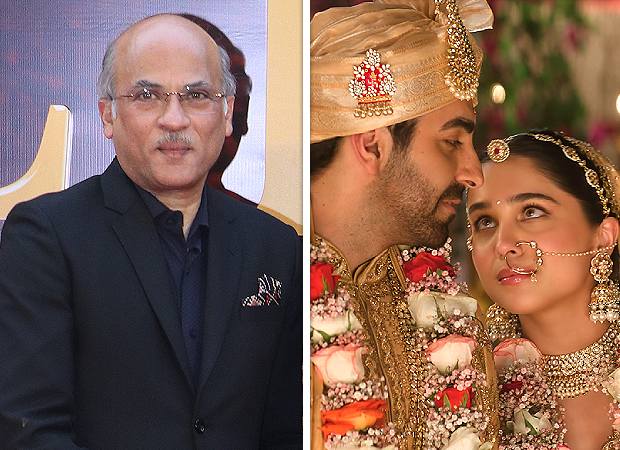
For more than three decades, Sooraj Barjatya has been Bollywood’s biggest ambassador of the great Indian joint family. His films have celebrated large households, family traditions, togetherness, respect for elders and, above all, sacrifice for the happiness of loved ones. From Hum Aapke Hain Koun to Hum Saath Saath Hain, the message has largely remained the same: no sacrifice is too big when it comes to keeping the family together. But going by the trailer of his upcoming film Yeh Prem Mol Liya, starring Ayushmann Khurrana and Sharvari, Barjatya seems to be attempting something rather surprising. He appears to be questioning the very family structure that he spent much of his career glorifying! And this is perhaps the most fascinating aspect of the trailer, which was unveiled on November 18.

In Hum Aapke Hain Koun (1994), Prem (Salman Khan) and Nisha (Madhuri Dixit) are willing to sacrifice their love for the happiness of their family. In Hum Saath Saath Hain (1999), the entire narrative revolves around the importance of keeping a family united despite misunderstandings, jealousy and differences. Even when relationships are severely tested, the ultimate objective is to restore the family’s togetherness. In Vivah (2006), Barjatya once again celebrates commitment, selflessness and the willingness to stand by loved ones in the most difficult circumstances. In Prem Ratan Dhan Payo (2015), too, family reconciliation forms the emotional backbone of the story. In short, Barjatya’s cinema has repeatedly told audiences that a united family is worth fighting for, even if it requires individuals to put their own happiness aside. But what happens when the family itself becomes the biggest obstacle to happiness? That is the rather uncomfortable question Yeh Prem Mol Liya seems to be raising.
The trailer revolves around Prem (Ayushmann Khurrana) and Purva (Sharvari), who wish to get married. However, Purva doesn’t want to leave her parents after marriage. Prem, instead of insisting that she follow the traditional arrangement, comes up with an unusual solution. He decides to move into Purva’s house, along with his entire family. On paper, it sounds like the ultimate Sooraj Barjatya dream. Two families living together under one roof, sharing happiness, celebrating festivals and becoming one large household. If anything, it should have been the perfect setting for another Hum Aapke Hain Koun.
Except that things don’t quite go according to plan. Instead of creating one big, happy family, the arrangement leads to friction, disagreements and clashes between the two households. The trailer even hints at the conflict escalating into a legal dispute. And herein lies the great Sooraj Barjatya contradiction.
The filmmaker who spent decades convincing us that keeping everyone together is the ultimate expression of love now appears to be exploring how the same togetherness can become a source of unhappiness. Think about it. In Hum Saath Saath Hain, the solution to a fractured family was to bring everyone back together. In Yeh Prem Mol Liya, bringing everyone together seems to be creating the fracture in the first place!

Of course, Barjatya’s earlier films weren’t without family conflicts. There were misunderstandings, emotional confrontations and moments when relationships almost broke down. However, the joint family itself was rarely questioned. The problems generally arose from individual circumstances or decisions, while the larger family structure remained the ideal worth preserving.
This time, the trailer suggests something different. What if the problem isn’t merely the people living together, but the expectation that everyone must live together in the first place? It is a question that many Indian families may find uncomfortable. For generations, joint families have been associated with security, emotional support, shared responsibilities and a strong sense of belonging. And there is no denying their advantages. However, living together also requires individuals with different personalities, habits, expectations and opinions to constantly adjust to one another.
Interestingly, Barjatya’s films have traditionally celebrated sacrifice as one of the highest virtues. His characters frequently surrender personal desires for the greater good of the family. But Yeh Prem Mol Liya could potentially introduce another perspective: What if constantly sacrificing individual happiness to maintain the appearance of a happy family isn’t necessarily a good thing? There is also another fascinating contradiction. Prem’s decision to move into Purva’s house challenges the traditional expectation that a bride must leave her parents after marriage. It is a progressive thought. Yet, Prem doesn’t simply decide to begin a new life with Purva. He brings his entire family along! In other words, even while challenging one age-old tradition, the film appears unwilling to let go of another; the belief that a family must remain physically together. And that raises an obvious question: Why can’t Prem and Purva simply live independently while maintaining close relationships with both sets of parents? Does loving one’s parents necessarily mean sharing the same roof with them? Does staying separately make someone a less responsible son or daughter? And should a couple’s desire for privacy and independence be viewed as selfishness?
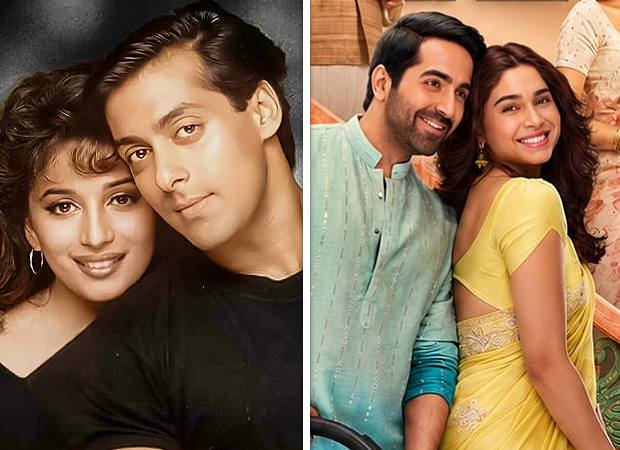
Perhaps this is also a reflection of changing times. When Hum Aapke Hain Koun was released in 1994, the large, prosperous, happy Indian family represented an aspirational world for millions of viewers. Its elaborate celebrations, affectionate relationships and emphasis on togetherness offered audiences a comforting fantasy. More than three decades later, the aspirations of many young couples have changed. Marriage is increasingly also about personal space, equal partnerships, individual choices and boundaries. A successful family need not necessarily be one in which everybody lives under one roof. What makes this especially interesting is that such a thought is coming from Sooraj Barjatya himself, rather than a filmmaker known for challenging established social conventions. For someone whose name has become almost synonymous with traditional Indian family values, this could represent a significant evolution.
But there is an important distinction. The trailer merely introduces the conflict. It does not necessarily establish that Barjatya intends to reject the joint family system. Knowing his storytelling sensibilities, it is entirely possible that the film will eventually resolve the differences and reaffirm the importance of togetherness. Nevertheless, the premise itself is intriguing because it places his most cherished cinematic ideal under scrutiny. Maybe Barjatya isn’t abandoning his philosophy. Maybe he is simply asking whether the definition of a happy family needs to evolve with time. After all, a family doesn’t become happy simply because ten people share a house. And a family doesn’t become unhappy simply because its members live at different addresses.
The real measure of togetherness is not how many people sit at the same dining table, but whether they genuinely respect, understand and support one another.
For 35 years, Sooraj Barjatya’s cinema has largely asked how much an individual should sacrifice to keep a family together. With Yeh Prem Mol Liya, he might finally be asking a far more important question: How much should a family be willing to change to keep its individuals happy?
And that could be the biggest twist of all. The filmmaker who made India fall in love with the joint family may now be the one asking whether a joint family is always the best recipe for happiness.



Comment
0Upholding journalistic discourse. No registration required.
No comments yet. Share your perspective!