

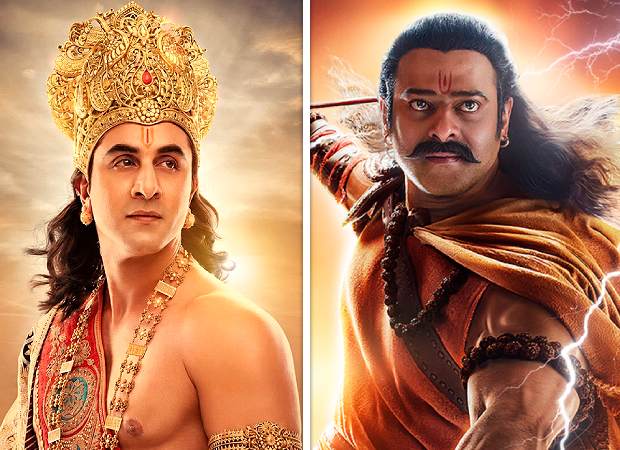
Three years ago, Om Raut’s Adipurush arrived in cinemas amid tremendous hype and expectations. Starring Prabhas, Kriti Sanon and Saif Ali Khan, the film was mounted on an enormous scale and promised to bring one of India’s most beloved epics to life. It opened to impressive numbers but soon turned into one of Indian cinema’s most talked-about disappointments. Cut to November 2026, and Nitesh Tiwari’s Ramayana, starring Ranbir Kapoor, Sai Pallavi and Yash, has emerged as a box-office phenomenon.

What’s fascinating is that both films are based on essentially the same story. The characters are familiar, the major events are known, and audiences are already aware of the eventual outcome. Yet, the response to the two films couldn’t have been more different.
In fact, Adipurush had opened bigger than Ramayana. The former collected approximately Rs. 86.75 crores nett across all languages on its opening day, compared to Rs. 62.47 crores for the latter. However, Adipurush struggled to sustain its initial momentum, while Ramayana witnessed an extraordinary surge after Diwali. The Ranbir Kapoor starrer collected a whopping Rs. 103.47 crores on its fifth day alone.
So what exactly did Ramayana get right that Adipurush couldn’t? Here are seven factors worth examining.
1. Audiences already knew WHAT would happen. They wanted to see HOW it would happen
Perhaps the most fascinating aspect of Ramayana‘s success is that almost everyone who bought a ticket already knew the story. There was no mystery surrounding Lord Rama, Sita or Ravana. Generations of Indians have grown up listening to this epic from their parents and grandparents.
Yet, audiences turned up in huge numbers because they wanted to experience how these familiar events would unfold on the big screen. How would Rama be portrayed? How would Ravana make his entry? How would Lanka look? How would the emotional moments involving Kaikeyi, Dasharatha and Rama be presented?
When audiences already know the story, the manner in which it is told becomes even more important. Adipurush demonstrated that familiarity alone cannot guarantee success. Ramayana, on the other hand, has shown that even an age-old narrative can attract extraordinary interest when its presentation strikes a chord.
2. The difference between modernising a story and changing its identity
One of the biggest criticisms faced by Adipurush was its attempt to give the characters and their world a contemporary makeover. From certain costumes and appearances to the language used by the characters, several creative decisions sparked controversy.
The makers seemingly wanted to appeal to a younger generation. However, many viewers felt that the interpretation was too far removed from their understanding of the epic.
Ramayana has also taken creative liberties, but its approach appears more measured. One particularly interesting example is the treatment of Ravana’s ten heads as different personalities within him. The idea offers a psychological interpretation of an iconic character without discarding his larger identity.
This is an important distinction. Audiences are not necessarily opposed to innovation. However, when a story is deeply embedded in people’s cultural memories, changes have to be handled carefully.
3. Dialogues can make or break a mythological film
The dialogues of Adipurush became one of its biggest talking points, and unfortunately, for the wrong reasons. Several lines were criticised for sounding excessively casual and inappropriate for characters associated with a revered epic. The backlash was so intense that the makers eventually announced changes to some of the dialogues.
Ramayana has largely avoided a controversy of similar magnitude. Its dialogue treatment generally favours the dignity and seriousness associated with the narrative, even if some lines may not work equally well for every viewer.
The lesson is simple. A mythological film can have modern technology, cutting-edge visual effects and international technicians, but its characters must still speak in a manner that audiences find believable within that world.
4. Ranbir Kapoor’s restraint versus the temptation to make every character larger than life
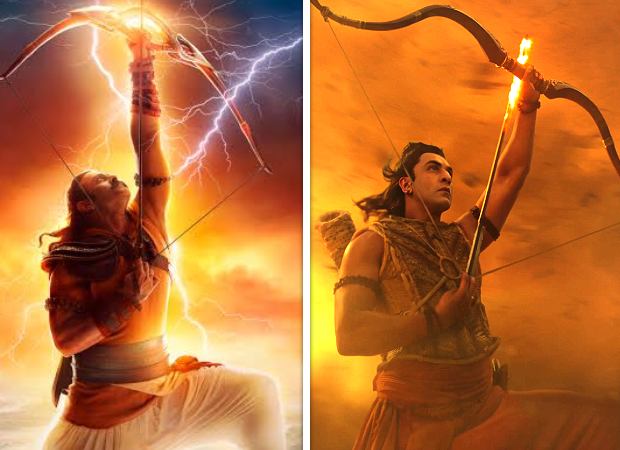
Another interesting aspect of Ramayana is Ranbir Kapoor’s portrayal of Lord Rama. At a time when commercial cinema is dominated by aggressive heroes, loud dialogues and exaggerated displays of masculinity, Ranbir has opted for a comparatively restrained performance.
His Rama is calm, composed and dignified. Instead of attempting to dominate every scene through physical aggression, the performance relies heavily on expressions, body language and understated authority.
This works particularly well because it reflects the qualities audiences traditionally associate with Lord Rama.
Meanwhile, Yash’s Ravana provides an effective contrast through his intensity and commanding screen presence. The difference in their personalities adds to the dramatic conflict.
Adipurush also had major stars playing iconic characters, but star power alone could not overcome the criticism directed at its overall execution.
5. VFX is not merely about impressing audiences. It is about matching their imagination
Creating a fantasy world is difficult. But recreating a world that millions of people have imagined since childhood is arguably an even greater challenge.
Almost every Indian has some idea of what Ayodhya, Lanka, Jatayu or Ravana should look like, whether through books, television adaptations, illustrations or stories passed down through generations.
This places an extraordinary responsibility on the visual-effects team.
Adipurush faced widespread criticism for its computer-generated imagery, character designs and the overall appearance of its world. Many viewers felt that the visuals did not match the scale and emotional significance of the subject.
Ramayana has received a considerably more encouraging response to several of its visual sequences, particularly those involving Ravana, Lanka and Jatayu. Although not every effect has escaped criticism, the overall spectacle has become one of the film’s major attractions.
It also helps that producer Namit Malhotra has deep connections with the global VFX industry through DNEG. This brought considerable technical expertise to the project.
However, the larger lesson is that expensive technology alone is not enough. The visuals have to make audiences believe in the world they are watching.
6. The emotional connection matters more than the budget
Both Adipurush and Ramayana were designed as massive cinematic spectacles. However, the Ramayana has endured for centuries not because of its battles or visual grandeur alone, but because of its emotions.
At its heart, it is a story of love, sacrifice, duty, loyalty, family and the conflict between right and wrong. These emotions must remain central to any successful adaptation.
Adipurush was often criticised for allowing its visual treatment and unconventional characterisation to overshadow the emotional core. Ramayana, despite some criticism surrounding the depth of certain emotional sequences, appears to have connected with a much wider audience.
The spectacular action sequences may encourage people to book tickets, but the emotional and cultural familiarity gives the film an additional advantage.
7. Marketing can deliver the opening. Audience acceptance delivers the blockbuster
The box office performances of the two films perhaps offer the clearest illustration of their contrasting fortunes.
Adipurush began with a bang but witnessed a sharp decline after its opening weekend. Ramayana followed a different trajectory. Its opening was strong, but the collections exploded after Diwali, with Day 5 emerging considerably bigger than Day 1.
Of course, the Diwali holidays played a major role in this unprecedented surge. However, the film’s ability to attract such enormous footfalls also points towards substantial audience interest beyond the initial curiosity.
Another potentially important factor is its appeal to families. A film based on the Ramayana can attract grandparents, parents and children together, turning a regular cinema outing into an occasion for the entire family. While precise group-booking figures would be needed to establish the extent of this trend, the film is particularly well-positioned to benefit from such an audience.
Ultimately, Adipurush and Ramayana underline a crucial distinction between opening a film and sustaining it. A beloved story, a gigantic budget and an impressive star cast may guarantee curiosity, but they cannot guarantee satisfaction.
The biggest lesson from this comparison is not that filmmakers should stop experimenting with mythology. It is that innovation must enhance the essence of a beloved story rather than overpower it.
Adipurush and Ramayana started with similar advantages. But their contrasting journeys demonstrate that audiences aren’t necessarily rejecting mythological cinema. They are responding very differently to how it is made.