

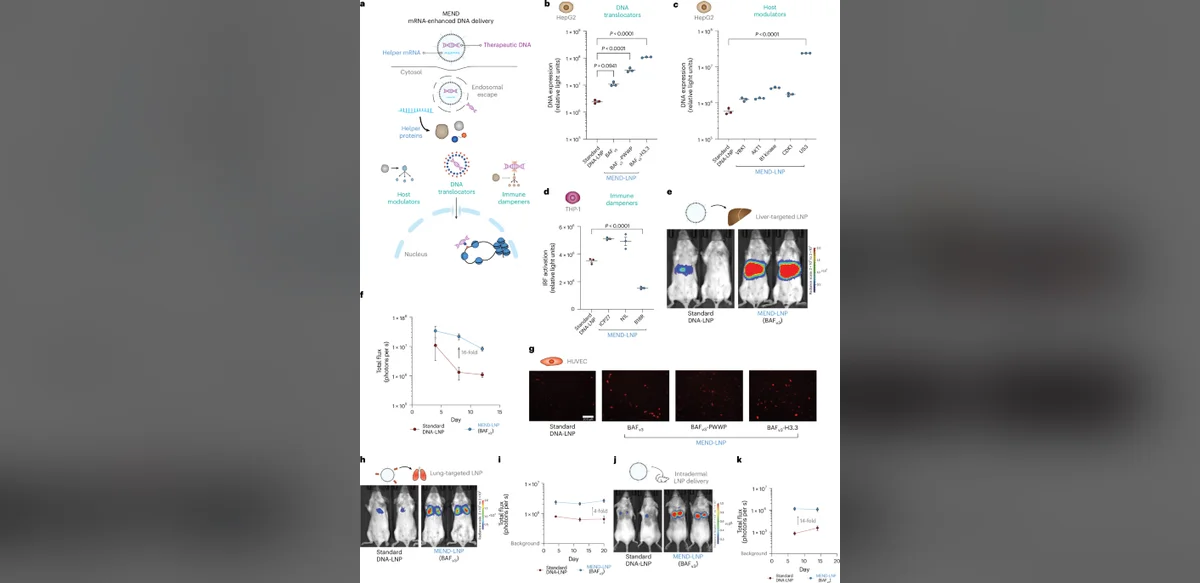

A recent study published in Nature Biotechnology highlights advancements in DNA delivery techniques through the use of modular helper proteins encoded by messenger RNA. Researchers demonstrated that co-delivering these proteins alongside DNA can enhance the efficiency of the process in cellular environments.
DNA delivery plays a central role in various biomedical applications including gene therapy and cellular engineering. Traditional methods often face challenges related to uptake rates and stability within target cells. The new approach addresses some of these limitations by incorporating helper proteins produced from mRNA templates.
The modular design allows the helper proteins to be customized for different delivery scenarios. This flexibility supports broader applications across multiple cell types without requiring entirely new delivery systems for each case. Experiments showed measurable improvements in DNA uptake when the helper proteins were present compared to standard delivery alone.
The mRNA encoding enables temporary expression of the helper proteins which reduces the risk of prolonged interference with cellular functions. Once the delivery task is complete the proteins are naturally degraded by the cell. This built-in transience contributes to the overall safety profile of the method.
Scientists involved in the work emphasized the importance of the modular aspect which permits combination of different protein domains to optimize performance. Such combinations can be adjusted based on the specific requirements of the DNA payload and the target biological system.
Further testing is needed to evaluate performance in more complex models beyond initial cell culture studies. The findings provide a foundation for continued refinement of nucleic acid delivery strategies that could support future therapeutic developments.
Overall the research contributes to ongoing efforts in the field to make DNA delivery more reliable and adaptable. By leveraging mRNA technology for helper protein production the approach integrates well with existing molecular biology tools and opens pathways for additional innovations in delivery optimization.





Comment
0Upholding journalistic discourse. No registration required.
No comments yet. Share your perspective!