

London's elite property market takes a hit
Home prices have crashed in London’s two most expensive boroughs — but you might not know it.The slump in the City of Westminster and Kensington & Chelsea, home to billionaires and oligarch mansions in their toniest neighborhoods, is the deepest in more than three decades, yet has drawn relative...
Published
Original News Source
Economic Times — Top Stories
Source Website
economictimes.indiatimes.com ↗
Content & Media Rights
Economic Times — Top Stories
Editorial Publisher
360 NEWS (Independent Media)
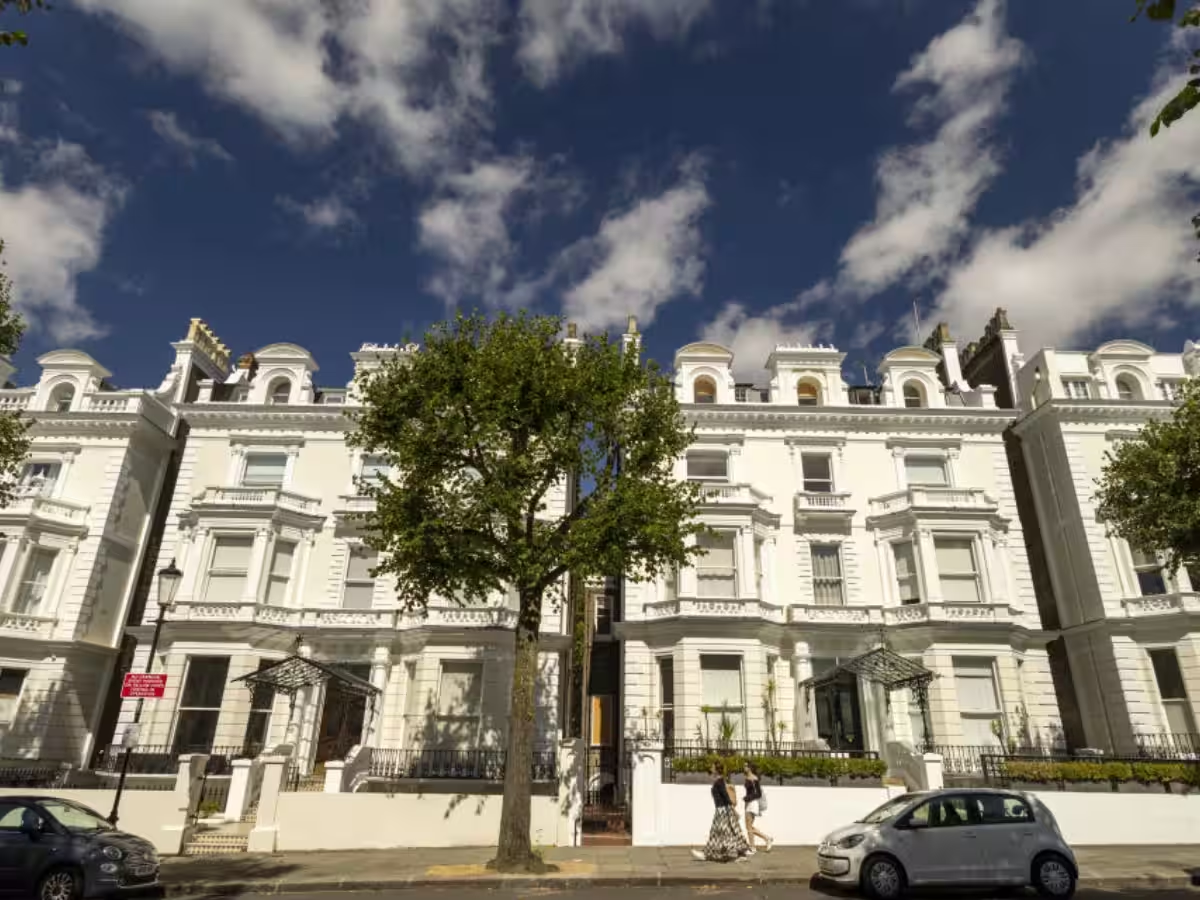
360 News
Home prices have crashed in London’s two most expensive boroughs — but you might not know it.The slump in the City of Westminster and Kensington & Chelsea, home to billionaires and oligarch mansions in their toniest neighborhoods, is the deepest in more than three decades, yet has drawn relatively little attention. That’s remarkable in a nation that’s usually obsessed with property values. The collapse shouldn’t be ignored, given what it may say about the capital’s waning appeal for the global rich and the the future direction of the wider UK housing market.Also Read: Dubai property buyers favour ready homes as under-construction sales slidePrices fell 18.5% in the City of Westminster and 15.6% in Kensington & Chelsea in September from a year earlier, according to official figures released last week. The two central London boroughs, which have the city’s highest concentration of properties valued at more than £2 million ($2.6 million), are now down almost 30% from their peaks of three to four years ago — exceeding their drop during the global financial crisis and approaching the scale of the UK’s early 1990s property collapse. Average prices in Kensington & Chelsea have dropped to £1.17 million, from £1.66 million in September 2022, Land Registry data show.There are reasons why this huge decline has failed to capture the public imagination. So far, it remains contained. London-wide prices fell a more palatable 3.5% in September, and were flat or rising in many outer boroughs. A slump in a district where foreign investors cluster and values are more than four times the UK average may seem distant. It also lacks the attention-grabbing trigger of previous property busts: a financial crisis, interest-rate shock or economic distress. This has been a “quiet” crash — but that doesn’t mean there’s no risk of contagion.136149473London has often led UK housing contractions, with price declines starting in the capital and then rippling outward. The question is whether the Westminster and Kensington & Chelsea markets are driven by unique factors that won’t be replicated elsewhere. There’s some support for that idea. Overseas capital poured into prime London property during the era of ultra-low interest rates that followed the 2008 crisis, driving years of outsize price growth in Kensington & Chelsea in particular. The current slump might be seen as correcting those excesses, though at this point the outperformance of the 2010s has already been more than reversed.Also Read: Europe housing crisis: What Spain, France, Germany and other countries are doing to make homes affordableIs this evidence that Labour’s tax policies targeting the wealthy — including abolition of the so-called non-dom regime and the imposition of a “mansion tax” on properties valued at more than £2 million starting in 2028 — is spurring an exodus? Not really. Prices have dropped on relatively low sales volumes, so there’s no stampede for the exits. Indeed, London’s population of ultra-high-net-worth individuals jumped 18% to about 7,800 last year, according to research firm Altar, drawn partly by the city’s reputation as an AI innovation hub.136149505You don’t need an exodus of existing owners for prices to tank. Potential investors just have to sit on their hands, and there’s plenty of incentive to do that — especially after the Iran war scuttled hopes that interest rates would drop this year.The UK environment has certainly become less favorable for overseas buyers of high-value property, but this process has been underway for more than a decade. What Labour may have done is find the tipping point. A non-UK-resident buyer of a £2 million additional home in London now pays £293,750 in stamp duty land tax (SDLT) — triple what was charged in 2012, when then-Conservative Chancellor of the Exchequer George Osborne started raising SDLT rates. Agents cited the transaction levy as the No. 1 drag on the market in a third-quarter survey by research firm LonRes, ahead of the mansion tax announced last year by former Labour Chancellor Rachel Reeves (who also raised SDLT during her tenure). Such punitive costs are easier to swallow when there’s an expectation that prices will rise.Broad indexes can understate the nuances of the market. The overwhelming majority of the housing stock in Westminster and Kensington & Chelsea is apartments. These are exposed to the overhang of a discredited leasehold system that’s associated with sky-high service charges. The owner of a 1,500-square-foot “high-amenity” apartment (those with facilities such as gym and 24-hour concierge) could expect to pay about £22,500 in service charges in 2025, after an 89% increase in five years, research by Jones Lang LaSalle Inc. shows.But this isn’t just a case of declines in lower-priced property pulling down the averages. Even detached houses in Westminster and Kensington & Chelsea have lost more than a quarter of their value, based on the Land Registry’s house price index. Values in Knightsbridge and Belgravia — ultra-affluent areas straddling the two boroughs — are more than 30% below their peak, says Coutts, the private-banking arm of NatWest Group Plc.Why has such a meltdown seemed to fly under the radar? I would ascribe some of that to the tone of industry commentaries. Property agents have a tendency to speak in euphemisms when the market is negative: You’re more likely to read about sellers needing to “adjust to pricing realities” rather than the fact that the bottom is falling out of the market.It’s not all negative. Yields have climbed as rents continue to increase amid a dearth of new supply. At some point, that may lead to a snap-back in prices — though it’s hard to see this happening as long as the Bank of England remains intent on raising interest rates.Just as likely is that the declines start to spread across the capital and beyond, as such downturns have in the past. If that happens, expect the quiet crash to become a lot louder. The more the central London slump deepens, the harder the alarm bells will be to ignore.(Disclaimer: The views expressed in this article are personal to the author)
GOOGLE ADVERTISEMENT
360°
360° PERSPECTIVE
Verified viewpoints, counter-arguments & evidence
Policy Proponents & Institutional Observers
(Institutional Assessment Desk, Public Policy Review Desk)
2026-11-25
"Proponents and sector analysts emphasize that this development strengthens institutional transparency, addresses long-standing public priorities, and establishes a foundation for durable systemic progress."
Source & Evidence:
Source: Economic Times — Top Stories ↗
Related Stories

India
Hafiz Talha Saeed's Public Praise For Asim Munir Puts Pakistan's Army-Jihad Links In Focus | News18
35 minutes ago

Entertainment & Cinema
Madhuri Dixit calls Shah Rukh Khan a ‘generous actor’ as Bhuvan Bam recalls getting a champi from the superstar
36 minutes ago

Entertainment & Cinema
From multiplex favourite to FAMILY superstar? Why Ayushmann Khurrana’s Yeh Prem Mol Liya could be a GAME-CHANGER; trade weighs in
49 minutes ago

India
The UP Paradox: Congress-SP Déjà Vu, And A Party Still Searching For Its Footing
4 minutes ago
Editorial & Syndication Notice: This story has been syndicated or published by 360 NEWS in accordance with verified fair-use, official press dissemination, and original attribution protocols. All trademarks, photos, and referenced quotes remain the property of their respective owners. For editorial corrections, press inquiries, or rights notices, contact [email protected].

Comment
0Upholding journalistic discourse. No registration required.
No comments yet. Share your perspective!