

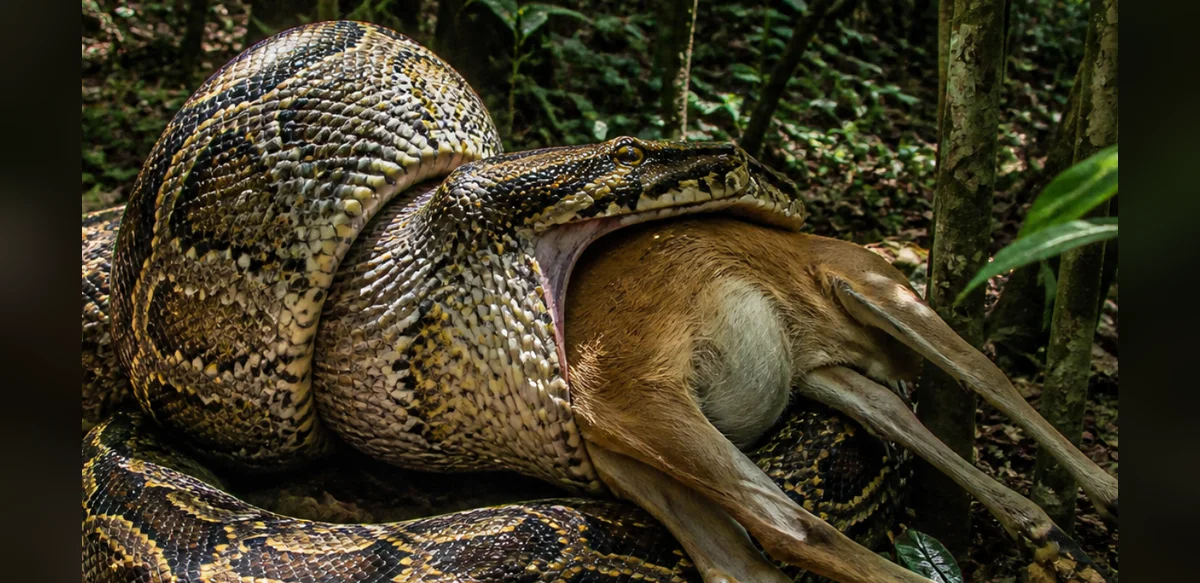
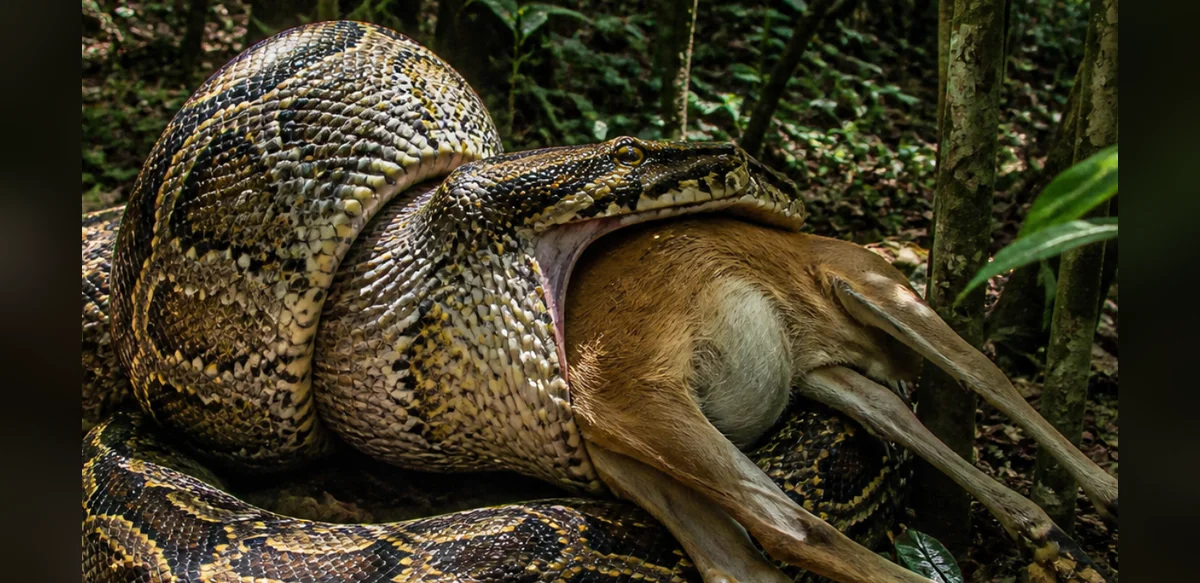
In the wetlands of southern Florida, an invasive species continues to demonstrate its ability to adapt and expand its influence on local wildlife. A Burmese python measuring approximately fifteen feet in length recently consumed a deer weighing seventy seven pounds in a single feeding. Researchers attribute this feat to the snake’s highly flexible jaws, which allow it to stretch and engulf prey much larger than its own head. This incident underscores broader patterns observed in the Everglades ecosystem.
Burmese pythons originally come from regions in Southeast Asia. They were likely introduced to Florida through the pet trade and have since established breeding populations in the wild. Their presence has raised alarms among ecologists because they prey upon a variety of native animals, including deer and alligators. The recent observation adds to evidence that these snakes can handle meals exceeding previous estimates of their capacity.
Scientists studying the event note that the python’s anatomy enables it to consume such sizable prey without difficulty. The stretchy ligaments and bones in the jaw separate to accommodate the meal, after which the snake slowly digests over an extended period. This physiological trait contributes to the species’ success as an invader in new environments where food sources vary in size.
The ecological implications extend beyond individual feedings. As these pythons multiply, they place increasing pressure on populations of native mammals and reptiles. Deer herds in affected areas may experience reduced numbers, which in turn influences vegetation growth and other species that depend on the same resources. Alligator populations also face competition and direct predation from the larger snakes.
Management efforts have included removal programs and public awareness campaigns. Wildlife officials encourage reporting of sightings and support research into population control methods. Without sustained intervention, the pythons could further alter the balance of the Everglades, an area already facing challenges from habitat loss and climate factors.
Ongoing studies aim to better understand the full range of prey sizes these snakes can handle. Data from field observations and laboratory analysis help refine models of their impact. Such information guides decisions on where to focus trapping resources and how to protect vulnerable native species.
Public interest in the topic has grown as images and reports circulate. Many residents express concern about the safety of pets and livestock near natural areas. Educational outreach emphasizes that these snakes generally avoid humans but can pose risks if provoked or encountered unexpectedly.
The combination of flexible feeding ability and rapid reproduction makes Burmese pythons a persistent challenge for conservationists. Continued monitoring and adaptive strategies remain essential to limit their spread and preserve the biodiversity of Florida’s unique landscapes. Researchers stress that early action offers the best chance to mitigate long term effects on the environment.
Additional fieldwork continues across multiple sites within the Everglades. Teams collect measurements, track movements using radio telemetry, and analyze stomach contents when possible. These efforts provide a clearer picture of how the invasive population interacts with its surroundings over time.
In summary, the documented case of the fifteen foot python consuming the seventy seven pound deer highlights both the biological capabilities of the species and the urgent need for coordinated response measures. Florida’s wildlife managers and scientific community work together to address this issue while balancing ecological preservation with practical control techniques.





Comment
0Upholding journalistic discourse. No registration required.
No comments yet. Share your perspective!