

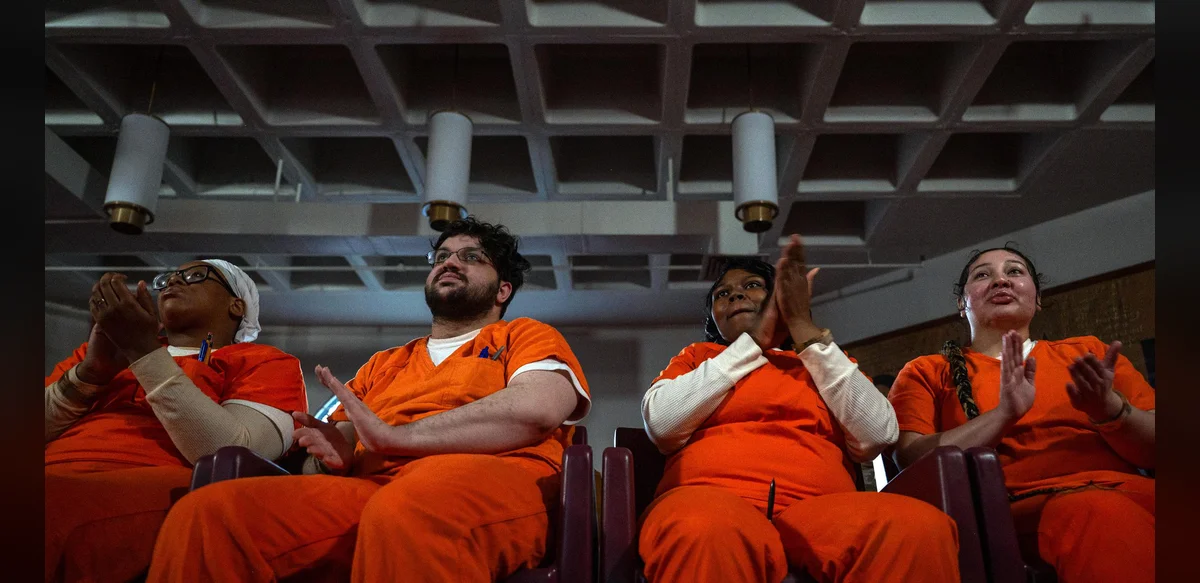
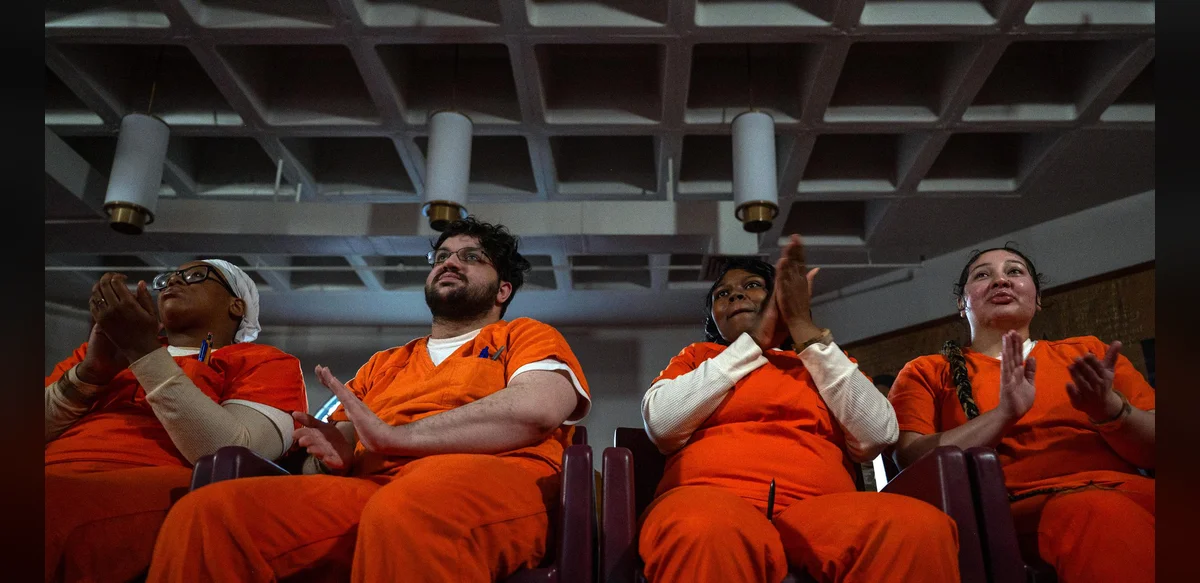
As evening light passed through the circular window of the chapel, individuals dressed in orange gathered quietly. They prepared to view a film exploring the justice system, one with which they had direct experience. The setting provided a moment of reflection amid their daily routine. The documentary presented stories and processes familiar to the audience, highlighting aspects of legal proceedings and institutional practices. Viewers remained attentive throughout the screening, noting parallels to their own situations without verbal commentary. The chapel offered a neutral space for this activity, separate from other areas of the facility. Sunlight gradually faded as the presentation continued, creating a subdued atmosphere. Organizers ensured the event proceeded smoothly, with participants seated in an orderly manner. The film covered topics such as court operations, sentencing guidelines, and rehabilitation efforts, drawing from various cases across the country. Attendees observed these elements closely, recognizing structures they had encountered previously. No disruptions occurred during the session, allowing for uninterrupted viewing. Following the conclusion, the group dispersed in a calm fashion back to their assigned areas. This type of programming occurs periodically to provide educational content within the institution. The choice of material aimed to inform rather than entertain, focusing on factual accounts of legal matters. Participants had prior knowledge of many depicted scenarios, which contributed to their engagement. The round window continued to allow diminishing natural light into the room until artificial illumination took over. Staff monitored the event to maintain order and safety standards. Such viewings serve as one component of broader activities available to those held in the facility. The documentary itself examined systemic elements without bias toward any particular outcome. Viewers processed the information individually, each drawing personal connections based on their histories. The overall experience lasted approximately ninety minutes, concluding before nighttime protocols began. This approach to programming reflects efforts to incorporate diverse materials into the schedule. The chapel’s architecture, including its distinctive window, provided an appropriate venue for group gatherings of this nature. Attendees wore standard issue clothing throughout, consistent with facility regulations. The session emphasized observation and contemplation over discussion. No additional commentary was offered by facilitators during the screening. The event aligned with routine operations designed to structure time for residents. Light conditions shifted naturally, enhancing the introspective quality of the gathering. In summary, the activity represented a standard use of media for informational purposes within a controlled environment. The individuals involved maintained composure and focus from start to finish. This description captures the essential elements of the evening without embellishment or external context. The process repeated similar patterns seen in prior sessions at the location. Attention remained on the screen as key segments unfolded, illustrating common legal pathways. The setting sun marked the transition from day to evening activities. Overall, the gathering fulfilled its intended purpose of presenting relevant content to an informed audience. Details such as seating arrangements and lighting contributed to the functional nature of the space. The documentary selection targeted themes of accountability and process within the justice framework. Participants left the chapel with the same demeanor they had entered, returning to regular schedules. This type of event underscores the role of visual media in institutional settings. The neutral tone of the presentation allowed for individual interpretation based on lived experience. No alterations to the standard format were noted during this particular showing. The circular window served both aesthetic and practical purposes by distributing light evenly. Attendees benefited from the structured pause in their day for this viewing. The entire sequence adhered to established guidelines for group activities. In essence, the scene depicted a straightforward interaction between the audience and the material presented. The fading daylight complemented the serious subject matter under discussion on screen. Such moments provide brief opportunities for engagement with broader topics. The facility continues to offer similar programs as part of its operational framework. The described event stands as one instance among many comparable activities. Focus stayed on the content throughout, with minimal movement among the seated group. The combination of natural light and the chapel environment created a contemplative mood suitable for the topic. This concludes the account of the session as observed.



Comment
0Upholding journalistic discourse. No registration required.
No comments yet. Share your perspective!