

On day 7 of the 57th International Film Festival of India (IFFI), Farhan Akhtar, Ashutosh Gowariker and Madhur Bhandarkar attended a special session titled ‘The Legendary 25’s’, celebrating 25 years of their respective landmark films – Dil Chahta Hai (2001), Lagaan (2001) and Chandni Bar (2001). Farhan Akhtar stole the show with his witty one-liners while also raising some pertinent points.
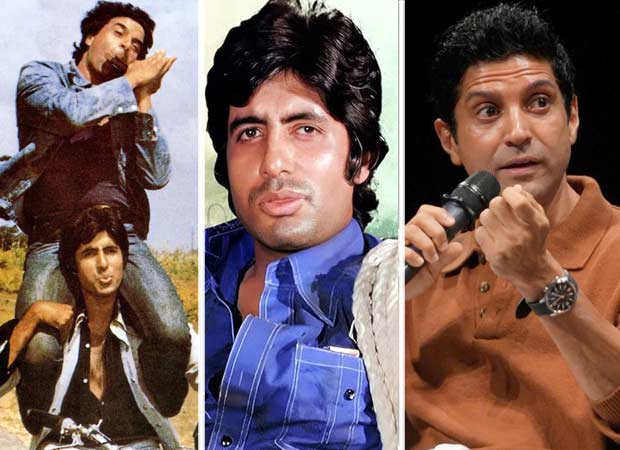
Farhan was asked about the track in Dil Chahta Hai of Akshaye Khanna romancing an older Dimple Kapadia and where he got the idea for it from. Farhan Akhtar immediately replied, “From the many crushes I had on older women! That’s the honest truth (smiles).”
He was asked if he had a crush on his school teachers. Farhan confessed, “Yes. I have mentioned one of them in the film. She called me after watching Dil Chahta Hai and was like, ‘You actually took my name’. Akshaye Khanna mentions Miss Kashyap, whom he paints. I had a huge crush on that teacher in school. So, I put her name in the film!”
The conversation then turned towards Zoya Akhtar, the talented writer-filmmaker sister of Farhan Akhtar. Growing up or even while working, did they have any creative conflicts? Farhan once again joked, “Right since my childhood, I understood that if I wanted to survive, I needed to believe that Zoya was always right!”
On a serious note, he said, “Zoya and Reema Kagti are incredible writers. So, with them, I feel that I am always in safe hands. Even if I am not in full agreement with a certain scene or sequence, I know that they have thought it through. So, I trust them and perform the way they want.”
An audience member remarked that while scripts of Hollywood classics are available, the screenplays of classic Hindi films like Sholay (1975) or Deewaar (1975) are not. Since both films were co-written by Farhan Akhtar’s father, Javed Akhtar, he was asked the reason for it.
Farhan Akhtar replied, “You are absolutely right. This is a conversation I have had with Salim saab (Salim Khan) and my father. I guess when they were writing, they were in such a momentum and they didn’t really stop to keep any of those pages that they were working on. So, they don’t have any originals with them. The only exception will be Trishul (1978) and a few more films. But they were in just some kind of a flow state, and they were writing. They didn’t think that this should be kept for posterity.”
He added, “Unfortunately, that is somewhere a part of our mindset. We tend not to archive or preserve things from our past. That has to change. It is unfortunate and I really wish more screenplays were available not just for audiences but even for us filmmakers to be able to read. And if different drafts of those screenplays were available, that would be even more amazing to see how something was changed.”

Comment
0Upholding journalistic discourse. No registration required.
No comments yet. Share your perspective!