

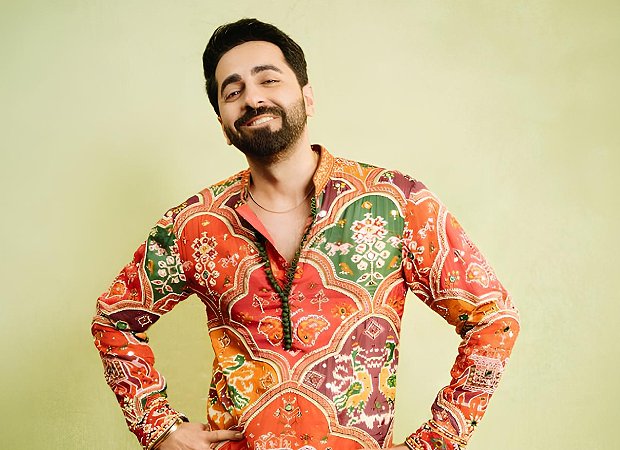
Ayushmann Khurrana’s biggest ambition with Yeh Prem Mol Liya may not be to attract a larger audience in metropolitan multiplexes. It could be to connect with the millions of moviegoers beyond them.
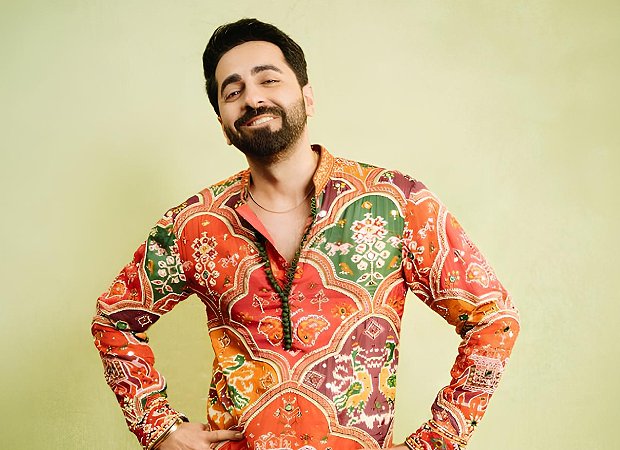
At the launch of the film’s title track in September, Ayushmann described Sooraj R. Barjatya’s upcoming family entertainer as a film for “Bharat, not India”. It was a revealing statement from an actor whose career has frequently been associated with urban audiences, unconventional subjects and socially relevant comedies. With Yeh Prem Mol Liya, scheduled for a theatrical release on November 27, 2026, he appears to be entering a cinematic world where the emotional vocabulary is familiar, the storytelling is rooted in family, and the appeal could extend well beyond the metropolitan circuit.
The distinction between Bharat and India, in this context, need not be interpreted as a geographical divide. It is better understood as a difference in audience sensibilities. A section of urban moviegoers may gravitate towards novelty, contemporary conflicts and unconventional protagonists. For another substantial section of the Hindi-speaking audience, romance, family bonds, music, sacrifice and the triumph of relationships remain equally powerful reasons to visit a cinema.
Rajshri has spent decades building its identity around precisely these emotions.
Ayushmann has never been an actor confined to one kind of storytelling. From the social satire of Vicky Donor and the gender politics of Dum Laga Ke Haisha to the family complications of Badhaai Ho and the relationship drama of Shubh Mangal Saavdhan, his strongest films have often found humour and humanity in recognisable Indian lives. The protagonists might be unconventional, but their concerns are accessible: parental expectations, marriage, social acceptance, financial pressures and the desire to belong.
That relatability could prove valuable in a market where a film’s reach is not necessarily determined by its metropolitan opening alone. Audiences in smaller cities and towns are not a monolithic category, nor do they automatically prefer traditional entertainers. They are discerning consumers with diverse tastes. However, a film that offers familiar emotions, appealing music and a compelling family story has the potential to travel across these different markets.

The opportunity for Ayushmann is to expand his audience without abandoning the qualities that made him distinctive. Rather than asking viewers to embrace an unusual social situation, Yeh Prem Mol Liya could invite them into a more familiar emotional universe. Whether that translates into greater theatrical reach will depend on the film itself, its promotional campaign, distribution and audience response.
Rajshri brings something more substantial than a legacy banner to this equation. Sooraj Barjatya’s films have traditionally treated family as an ecosystem in which individual choices affect everyone. In Hum Aapke Hain Koun..!, celebration and ritual become central to the romantic narrative. In Hum Saath-Saath Hain, relationships and familial responsibility drive the story. Even as contemporary audiences and their expectations have evolved, this emphasis on collective emotional experience remains a recognisable Rajshri signature.
Ayushmann’s challenge is to make this world feel lived-in rather than inherited. If his performance brings contemporary emotional honesty to Rajshri’s established sensibility, Yeh Prem Mol Liya could introduce him to audiences who have not necessarily followed his earlier work.
The larger ambition, then, is not to leave metropolitan India behind. It is to make his appeal more geographically and culturally expansive. For Ayushmann, Yeh Prem Mol Liya could be an opportunity to discover how far a familiar story, told with sincerity, can travel.




Comment
0Upholding journalistic discourse. No registration required.
No comments yet. Share your perspective!