

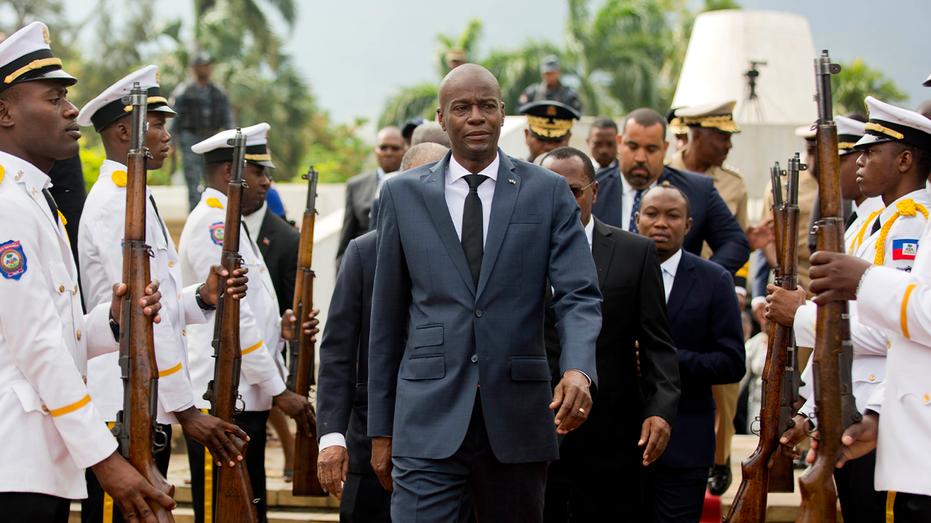
A Florida pastor was convicted Wednesday in a plot to assassinate Haitian President Jovenel Moïse that prosecutors say was hatched in South Florida and partly financed with U.S. COVID-19 relief money used to pay foreign mercenaries.
Christian Emmanuel Sanon, a dual Haitian-American citizen, was found guilty on all eight federal charges following a nearly eight-week trial in Miami. He faces up to life in prison when he is sentenced Feb. 10.
Prosecutors said conspirators initially planned to install Sanon as Haiti's president in exchange for lucrative security and infrastructure contracts before abandoning him as their preferred candidate weeks ahead of the assassination.
FLORIDA JURY CONVICTS 4 MEN WHO PLOTTED ASSASSINATION OF HAITI'S PRESIDENT FROM SOUTH FLORIDA HUB
A squad of mostly retired Colombian soldiers stormed Moïse's home on July 7, 2021, killing the president and wounding his wife.
Sanon denied knowing about any plan to kill Moïse, testifying that he had communicated with people seeking to replace the Haitian leader but that the group had moved on to another candidate long before the assassination.
His attorney, Zeljka Bozanic, said the defense team was disappointed by the verdict and planned to appeal.
According to prosecutors, South Florida served as a hub for planning and financing the conspiracy, which involved roughly two dozen foreign mercenaries paid in part with money obtained from federal pandemic relief programs intended to help businesses.
The indictment said the scheme took shape in April 2021, when Sanon met with a former Haitian senator and several U.S. businesspeople in South Florida.
'THEY FED HIM HIS OWN EARS': TOP REPUBLICAN SHARES HORRIFYING STORIES OF GANG RULE IN HAITI
Investigators said the group agreed that Sanon, once installed as president, would award contracts for infrastructure projects, security forces and military equipment to two Florida-based companies.
The companies initially hired about 18 Colombians with military training to provide security for Sanon. Conspirators also spent months acquiring weapons and body armor and attempting to establish ties with Haitian gangs, prosecutors said.
Prosecutors presented evidence that Sanon helped raise money for the conspiracy and arranged travel and lodging in Haiti for himself and others.
BUKELE WARNS HAITIAN GANG LEADERS THAT HIS FORCES WILL 'FINISH' THEM AS HE DID IN EL SALVADOR
By June 2021, however, the plotters concluded Sanon lacked the constitutional qualifications and popular support needed to become president and shifted their backing to another candidate.
Sanon is among a dozen defendants convicted in the U.S. investigation into Moïse's assassination, with more than 40 people charged and five already serving life sentences.
Four other men were convicted in May of conspiring to kill or kidnap Moïse, providing material support for the plot and violating the U.S. Neutrality Act. They also face possible life sentences.
Haiti remains without a president more than five years after Moïse's assassination, which deepened political turmoil in the Caribbean nation. A presidential election is scheduled for next year.
The Associated Press contributed to this report.


Comment
0Upholding journalistic discourse. No registration required.
No comments yet. Share your perspective!