

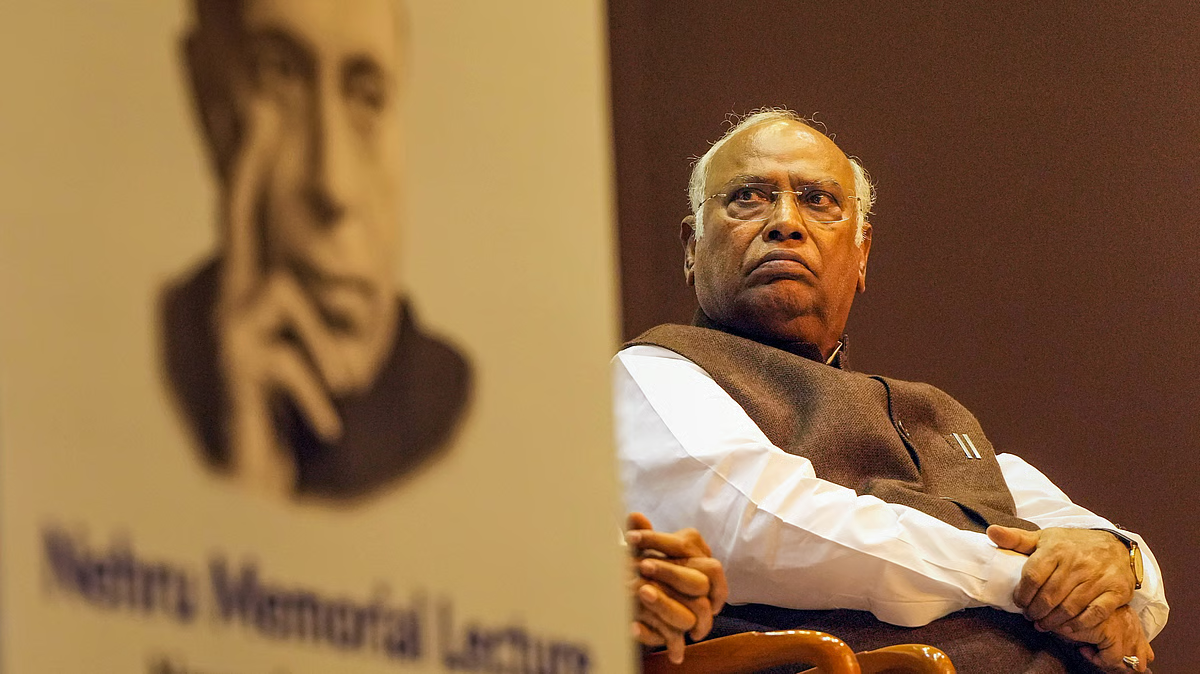
Citing the ICMR’s SAMPADA survey, Congress president Mallikarjun Kharge said 55.9% of women of reproductive age and 42% of children aged one to four had anaemia
Kharge pointed to a gap of more than Rs 2,500 crore between funds released and spent under POSHAN 2.0 over four years
GOOGLE ADVERTISEMENT The Department of Health Research said anaemia prevalence was lower than in previous national surveys and most cases were mild
The Congress on Wednesday called on the Centre to account for its record on nutrition after a national survey found widespread anaemia among women and young children. Party president Mallikarjun Kharge asked how India could realise its demographic dividend while millions continued to face malnutrition.
Citing the Indian Council of Medical Research’s SAMPADA survey, Kharge said in a post on X that 55.9 per cent of women of reproductive age and 42 per cent of children aged one to four had anaemia. Nearly two-thirds of adolescent girls and boys were deficient in vitamin B12, he said.
How can India realise its demographic dividend when millions of its women and children continue to suffer from malnutrition? The Modi Govt's own ICMR-SAMPADA report reveals that - ▪️55.9% of women of reproductive age are anaemic. ▪️Nearly two-thirds of adolescent girls and boys are deficient in Vitamin B12. ▪️42% of children aged 1–4 years are anaemic. ▪️In Gujarat, 66% of women of reproductive age and 57% of young children are anaemic. Modi Govt's emphasis on “mild” anaemia cannot obscure the fact that nearly 30% of women of reproductive age suffer from MODERATE or SEVERE anaemia. The latest NFHS-6 also reveals that nearly one-third of our children are underweight and one in five suffers from acute malnutrition. Consider the Government's own financial records — 1️⃣ Over ₹1.13 lakh Cr released under Saksham Anganwadi, POSHAN 2.0 and predecessor schemes in six financial years. 2️⃣ Over ₹2,500 Cr gap between funds released and utilised under POSHAN 2.0 in just four years. 3️⃣ Nearly 44% of funds released under the original POSHAN Abhiyaan remained unutilised. 4️⃣ The share of Women and Child Development in the Union Budget has nearly HALVED - from 0.96% in 2015-16 to 0.50% in 2025-26. After 12 years of the Modi Govt, multiple nutrition schemes, fortified rice and iron supplementation programmes, where is the ACCOUNTABILITY?
— Mallikarjun Kharge (@kharge) November 25, 2026
Kharge questioned the government’s emphasis on mild cases, saying nearly 30 per cent of women of reproductive age had moderate or severe anaemia. He also cited the sixth National Family Health Survey, which he said showed that nearly one in three children was underweight and one in five suffered from acute malnutrition.
Congress points to gaps in nutrition spending
Kharge said the Centre had released more than Rs 1.13 lakh crore over six financial years for Saksham Anganwadi, POSHAN 2.0 and their predecessor schemes. He said spending under POSHAN 2.0 fell short of releases by more than Rs 2,500 crore over four years, while nearly 44 per cent of the funds released under the original POSHAN Abhiyaan went unspent.
He added that the share of the Union Budget allocated to women and child development had fallen from 0.96 per cent in 2015–16 to 0.50 per cent in 2025–26. He questioned the government’s accountability after 12 years in office and a series of interventions, including fortified rice and iron supplementation.
Gujarat figures draw scrutiny
Congress general secretary Jairam Ramesh had highlighted Gujarat’s results on Tuesday, citing the Union health ministry’s report, Anaemia and Micronutrient Deficiencies Across the Life Course in India. He said 61.4 per cent of adolescent girls aged 10 to 19, 63.8 per cent of women aged 20 to 59 and 66.2 per cent of women of reproductive age in Gujarat had anaemia. In Kerala, the corresponding figures were 21.4 per cent, 28 per cent and 29.1 per cent.
Ramesh said Gujarat recorded the highest anaemia prevalence among children aged 12 to 59 months, at 56.5 per cent, while Kerala recorded the lowest, at 14.5 per cent.
The SAMPADA survey, conducted from 2023 to 2025, covered more than two lakh people in over 81,000 households across 183 districts in 35 states and Union Territories. Researchers analysed more than 1.7 lakh blood samples to measure haemoglobin levels.
The findings, released on Monday, showed lower anaemia prevalence than previous national surveys, with severe anaemia accounting for less than 2 per cent of cases across most age groups. The Department of Health Research said most cases were mild, presenting an opportunity for early intervention.
With PTI inputs




Comment
0Upholding journalistic discourse. No registration required.
No comments yet. Share your perspective!